During a community workshop in Katlehong, South Africa, children were asked what would happen if a life-threatening flood hit while they were home alone. They listed the hazards: rising water, drains backing up, the tap turning brown. But when asked what they could do to keep themselves safe, the group fell silent. One boy finally raised his hand. “I’d lock the door and wait.”
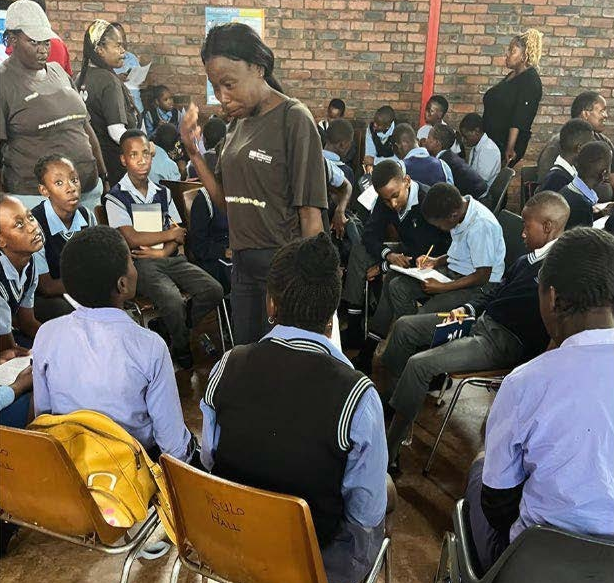
In Katlehong, South Africa, more than 200 residents — schoolchildren, elders, and community leaders — gathered for a workshop organized by the South African Weather Service (SAWS), with support from the Met Office, the UK’s weather and climate service, as part of the WISER Health programme. It focused on designing better ways of getting climate and weather warnings to people with the fewest resources to act on them. (Photo Credit: Met Office, UK’s weather and climate service and WISER)
Today, many health systems lack the capacity to see threats coming with enough time to act, resulting in countless lives and livelihoods lost. Consider this year alone: 35,000 excess deaths were recorded after back-to-back heatwaves suffocated cities in Europe, an Ebola outbreak is claiming lives in Central Africa, and supercharged El Niño rains are poised to fuel a record-breaking number of dengue cases in Latin America.
The next phase of modern public health must move beyond static preparedness to dynamic resilience — systems that see a shock coming and act in time to avoid or blunt the damage.
This is now within reach. Advances in science and technology can help us see risks earlier, and countries and cities are already using these innovations to make their health systems more resilient. The ultimate test of a strong health system is whether it leaves communities better able to get ahead of the next threat.
Four capabilities can make the difference.
1. See the Threat Early
From AI-enabled weather forecasts to improvements in genomic surveillance, new technologies are giving decisionmakers a clearer view of what may be coming, further in advance. That extra time can mean getting medicines where they are needed, warning families, and preparing clinics before a threat becomes a widespread emergency.
In Cali, Colombia, a project called Dengue.AI is putting that time to work. The system can forecast dengue outbreaks up to three weeks in advance, with 93 percent effectiveness. It looks at risk across small areas of the city, helping health teams see where cases are most likely to rise and focus their response there.
3. Invest in Prevention Not Just Response
Responding to an emergency costs far more than preparing for one. When a country invests up front, an unpredictable bill becomes a manageable line item, freeing savings for other needs.
Philanthropy is already experimenting with new approaches. In 2025, more than 35 philanthropies came together through the Climate and Health Funders Coalition, committing an initial $300 million to support country-led health initiatives tackling extreme heat, air pollution, and climate-sensitive infectious diseases.
A forthcoming Mode Economics analysis points to a US$100 billion annual opportunity for banks and private institutions to fund corporate climate adaptation for health, a market still largely untapped. Research we commissioned from the World Resources Institute also found returns up to $68.40 for every dollar invested in climate services for health.
At The Rockefeller Foundation, that is the promise of resilience: giving communities more options than locking the door and waiting.