All Grantee Impact Stories / All Grantee Impact Stories Grantee Impact Story

How AI Is Helping Rio de Janeiro Respond to Climate Disasters

A WhatsApp chatbot is transforming the government’s emergency response to floods and landslides in low-income communities.

Bruno Abbud — Featured Writer

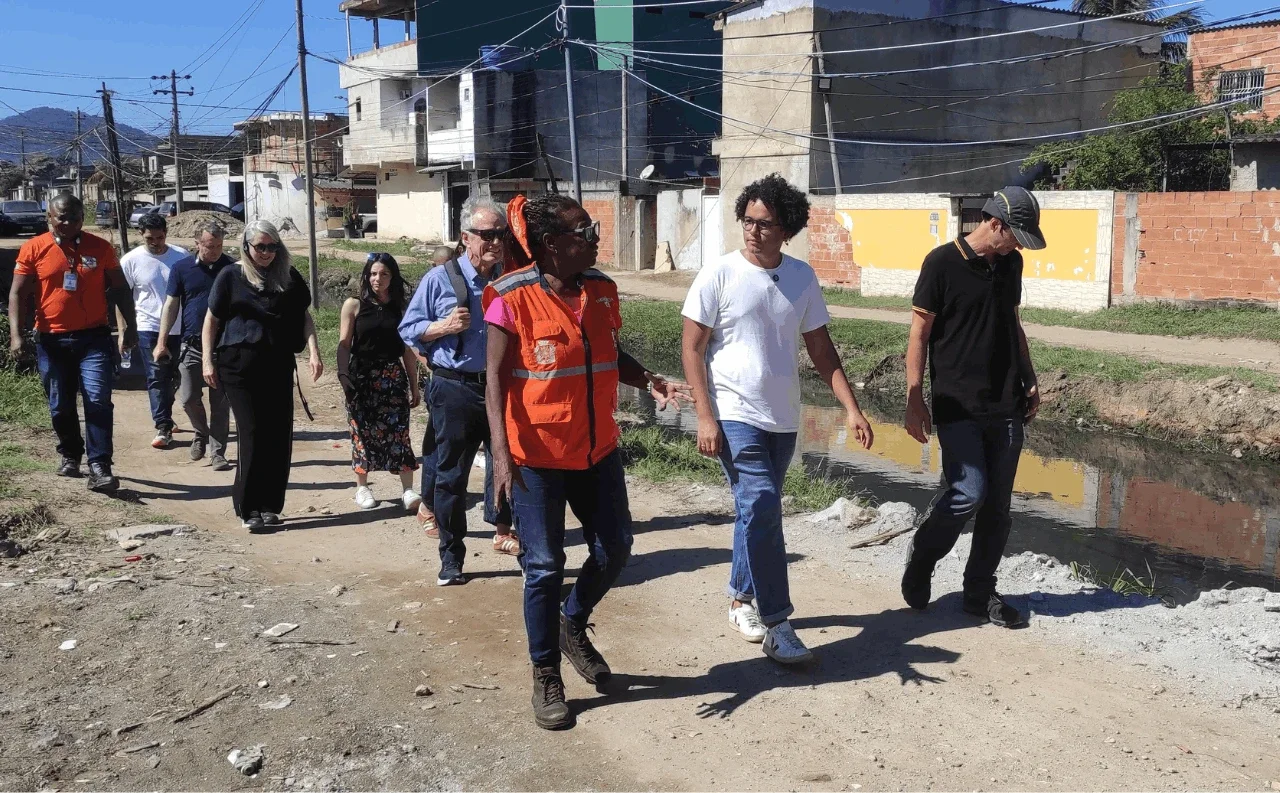
A Local Civil Defense coordinator works with residents in Jardim Maravilha to improve flood preparedness and emergency response.

After floodwaters swept through her home, 64-year-old Maria das Neves Cunha lost her furniture, documents, kitchen supplies, rugs — “Everything,” she says. She lives in Jardim Maravilha, a community of 23,000 residents on the far western edge of Rio de Janeiro, Brazil. When it rains, her neighbor, Célia Regina, suddenly has to leave home and stay with friends. “The water here gives no warning,” she says. “It creeps in, and then there’s nowhere for it to drain. I spend three, five days at other people’s houses, and when I return, my house is full of bugs, frogs, tree frogs, that rotten sewage water…During floods, we suffer terribly. It’s heartbreaking.”

Both women were caught off guard by the recent flood and had no time to place their furniture on wooden pallets — the most common way residents try to prevent damage. Global warming is producing heavier rainfall, especially in tropical regions such as Rio de Janeiro. In November 2025, during the last major storm to hit the city, Rio recorded 105 weather-related emergencies, making communication in the neighborhood precarious.

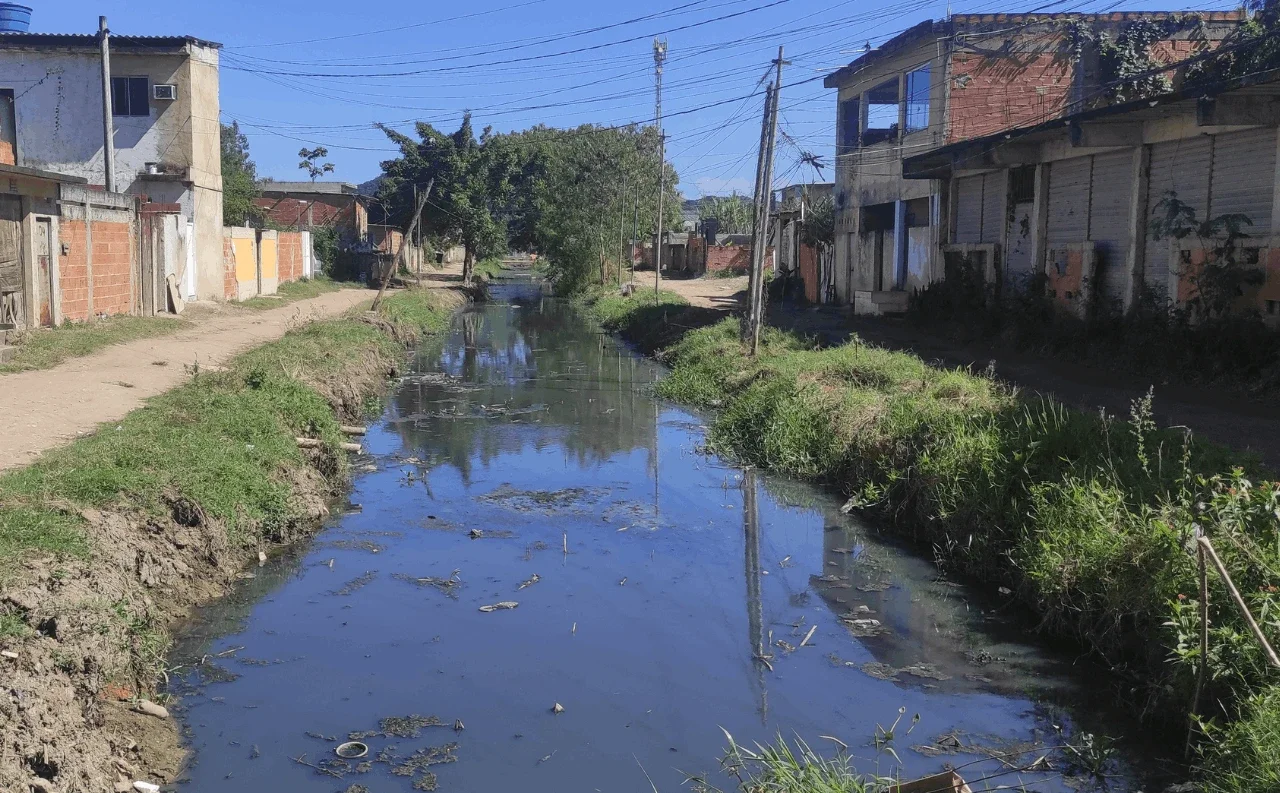
  • An urban canal in Jardim Maravilha, where improved data and AI-powered alerts are helping residents and city officials respond to climate-related flooding.

Now, Rio de Janeiro can see the danger coming and reach the people in its path before the water does, thanks to a project led by Columbia University’s Global Center in Rio in collaboration with two city agencies — IPLAN (Rio’s technology and IT agency) and COR (the Rio Operations Center) — and supported by The Rockefeller Foundation.

Chatbot vs. Flood

The project is already showing results. On May 20, torrential rains hit Rio de Janeiro. Shortly afterward, the chatbot sent its alerts, and instead of winding its way through a dated system, a resident’s report instantly reached COR through the chatbot. Detected by AI, the message described how a 65-year-old woman with health problems had floodwater invading her backyard. There was a strong sewage smell, mosquitoes, and the risk of water entering the home. Thanks to the alert, city officials were able to respond immediately.

The project, initially targeting 53,000 people across Jardim Maravilha and Acari, two lower-resourced areas of the city, implemented a WhatsApp chatbot designed by Columbia Global Center Rio to alert residents about flood risks and other rain-related disasters, such as landslides. Rather than building something new, the project strengthens the WhatsApp networks residents and community leaders already trust, formalizing information flows that until now were scattered and informal. “Climate, as a broad agenda, has been one of our key priorities, both in terms of research and locally driven projects. This initiative strongly reinforces our mission by bringing together the expertise of Columbia University with local knowledge and action to address pressing global challenges and generate meaningful local impact. We are very pleased with the results achieved so far,” says Ana Paula Vitelli, Director of Columbia Global Center Rio.

Now, municipal agencies can supply the project with population data to help maximize the platform’s reach and improve the emergency response delivered by COR. And because the chatbot operates within COR’s existing, the City owns and maintains the platform, supporting its continued use after the Foundation-funded project concludes.

The chatbot also gathers information from residents’ responses, generating reports and datasets that feed AI systems and sharpen the city’s emergency response.

In an initial test, messages sent to 2,000 Jardim Maravilha residents during a February storm drew almost immediate responses — an early sign of strong engagement. Message read rates reached as high as 65%, with 70% of those opened within two hours.

Researchers also found that one-third of users were registered as low-income households, demonstrating the chatbot’s ability to help communities in need during critical moments.

“Flooding causes health problems, school absenteeism, homelessness…,” says Vinicius Lopes, the manager of the chatbot project at Columbia Global Center Rio. “So, the feedback people provide ultimately helps shape public policy.”

Lopes — who previously led “Cocôzap,” a digital platform encouraging over 140,000 residents in underserved Rio neighborhoods to report sanitation failures — and his team are now analyzing data from a new wave of chatbot messages sent to 50,000 residents.
Islands of Data

The chatbot is the part residents see. What makes it work sits a layer beneath, in the way Rio itself learned to organize its data.

Ingrid Gomes, the vice president of artificial intelligence at IPLAN, the city’s municipal technology agency, which has more than 600 employees operating over 500 information systems, says the city used to handle information manually.

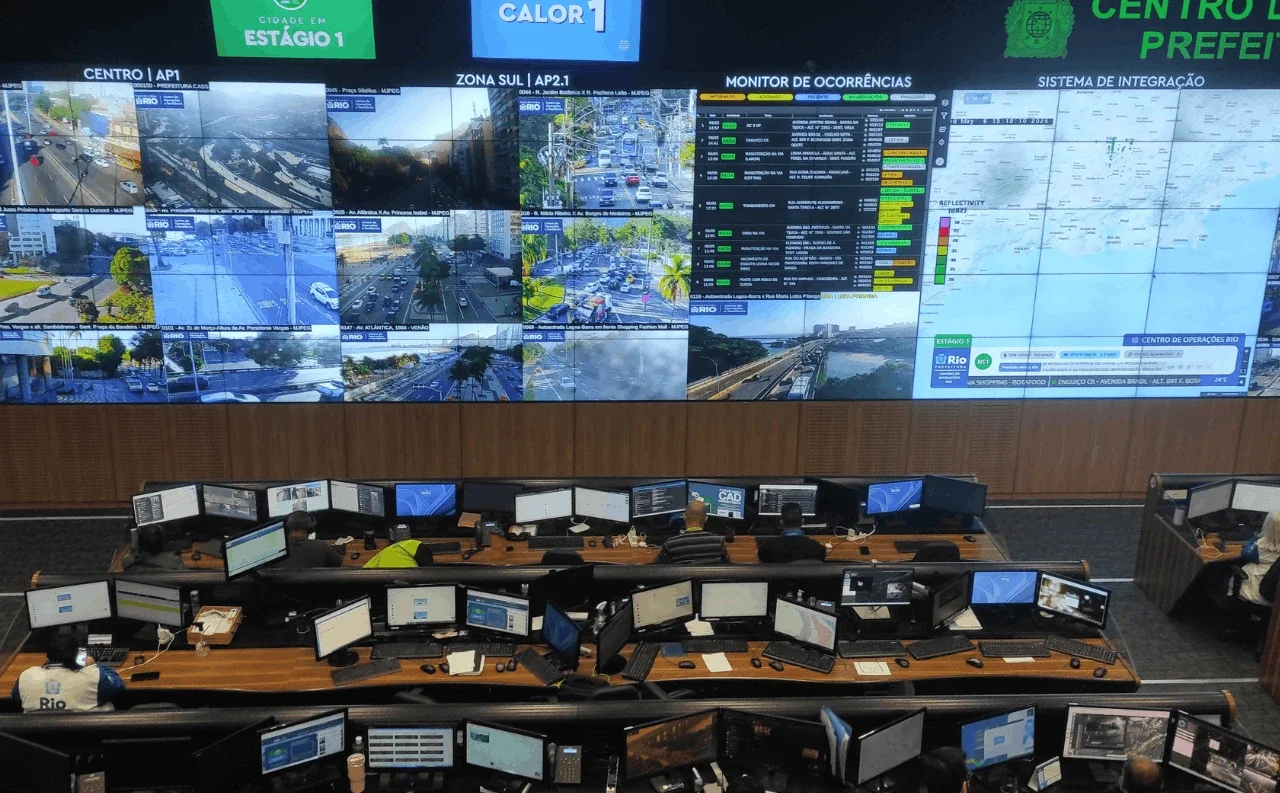
  • The Rio Operations Center uses real-time information, including reports from an AI-powered WhatsApp chatbot, to support faster emergency response during severe weather.

“Now we are institutionalizing a single official communication channel,” she says, “automatically receiving and classifying all public requests, which are ultimately reviewed by a human operator who determines each case’s level of priority.”

Rio’s potential for AI solutions was made possible by a 2020 IPLAN initiative to integrate public information into a “data lake” — a massive digital repository.

“Imagine a lake filled with islands,” says Gomes. “Each island is a different government department. One island contains health data. Another contains education data.” She explains that a new island, called the “Integrated Municipal Registry,” now consolidates information from all the others — though selectively — with a focus on health, education, and social assistance. Through the data lake, IPLAN manages information across thousands of services to better respond to citizens’ needs.

According to Thiago Trabach, the CEO of IPLAN, this intelligence is also being integrated into public administration to rethink how services are delivered to citizens. Trabach says the integration effort took five years, from 2020 to 2025, before it could support initiatives like The Rockefeller Foundation-backed project on flooding and climate emergencies. Now the city government makes these datasets available, so leaders and innovators like the Columbia Global Center Rio can help strengthen residents’ resilience to floods and other disasters. But the data’s value extends to every policy area imaginable.

“We began identifying gaps in access to public services and proactively reaching out to residents,” says Trabach. “Through the chatbot, we can understand why people are not accessing services.” For example, many people were losing access to their primary source of income — a government cash-transfer program — simply because they failed to renew their registration. But with the ubiquity of WhatsApp, a single reminder message reduced absenteeism in recertification by 7 percent, according to IPLAN.

In Brazil, WhatsApp is nearly universal — installed on 99% of smartphones, according to a 2023 survey, with most users on the app daily. “People spend six hours a day on WhatsApp,” says Gomes. “I can reach them through the platform they look at the most.” It has made city information something residents can receive easily and dependably — not only in the thick of an emergency or the cleanup that follows, but in the steadier, often-overlooked work of preparing for the next one.

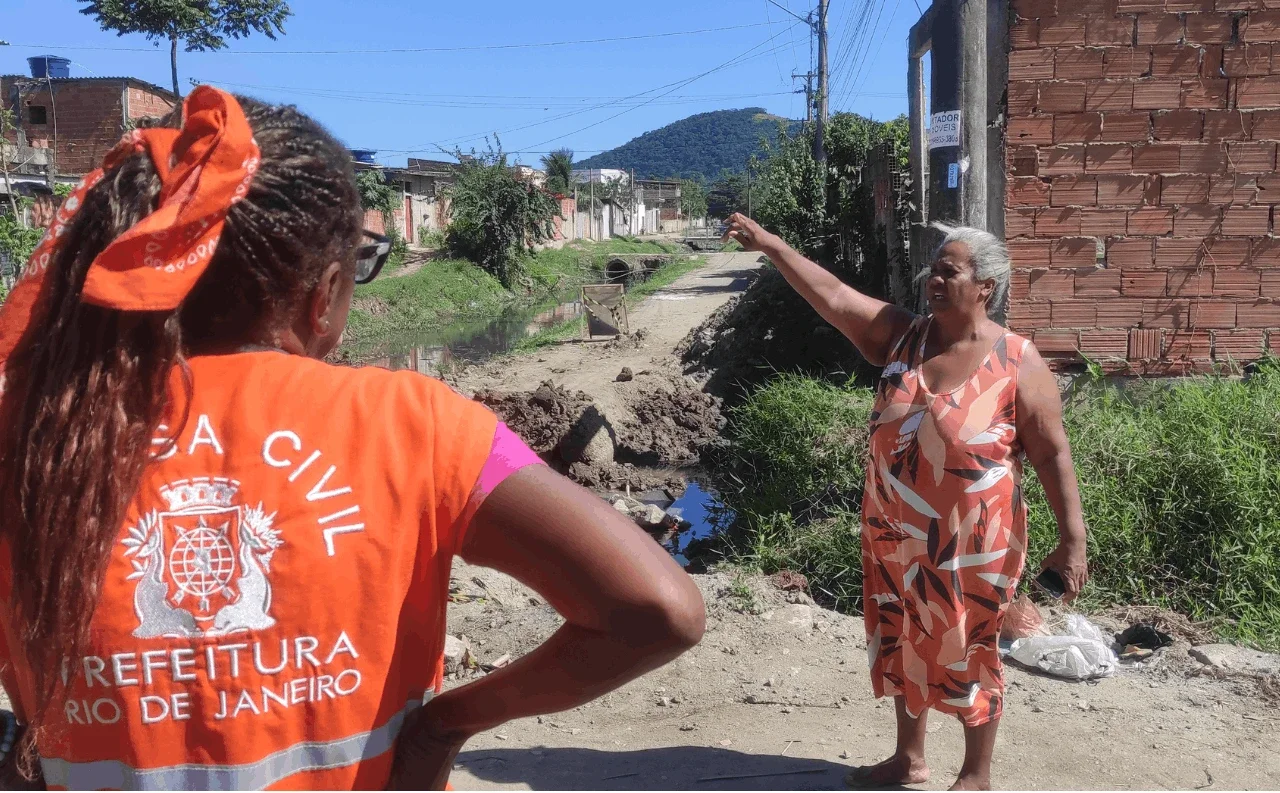
  • A Civil Defense official meets with a resident in Jardim Maravilha, where a new AI-powered WhatsApp chatbot is helping communities prepare for floods and other climate emergencies.

On the Ground

Infrastructure is just the start of what’s coming to Jardim Maravilha. With data pouring in on the chatbot, local officials can pinpoint areas and populations most in need, source novel solutions, and start thinking more about resilience and less about damage control.

The ambitions reach beyond Rio. “The goal is to bring this project to other cities and countries, especially now that we’re seeing results,” says Vinicius Lopes. “With a greater amount of real-time information, the City is able to make better informed decisions. Ultimately, our goal is to foster active citizen engagement while strengthening the City’s ability to respond to climate-related emergencies – and, in doing so, help cities strengthen their resilience and adaptive capacity to extreme climate events.”

This is exactly the kind of effort The Rockefeller Foundation has been supporting — early, deliberate investments in better public service delivery through responsible AI use, from Turn.io’s civic platform in Cape Town, to Dengue.AI’s dengue-outbreak forecasting in Cali, Colombia, to the AI partnership transforming state services in Maryland. The pattern across them is clear: a technical nonprofit that knows the landscape, capable implementing partners on the ground, and a government willing and able to uplevel its own systems. When you get the combination of all three, AI stops being a pilot and not only becomes part of, but strengthens the institutions people already rely on.

In Rio, that bet is proving out block by block — a model other climate-vulnerable cities can adapt, and a demonstration that responsibly deployed AI can improve emergency preparedness and strengthen public services for vulnerable communities.
But for the people of Jardim Maravilha, the stakes are closer to home.

“This chatbot is going to help me in so many ways,” says Maria Heloisa Antônia Florindo, the local Civil Defense coordinator in Jardim Maravilha. “I’ll be able to help this population much more.”

  • Community leaders, local officials, and project partners tour Jardim Maravilha.

Read More