Charles Wayne Self was facing the prospect of a foot amputation when he first joined Community Servings.
With diabetes, severe vascular issues that led to a quadruple bypass, and a foot ulcer, it was clear to Self that medications alone weren’t doing enough. He would have to join the battle for his health on a more personal level: He’d have to change what he ate.
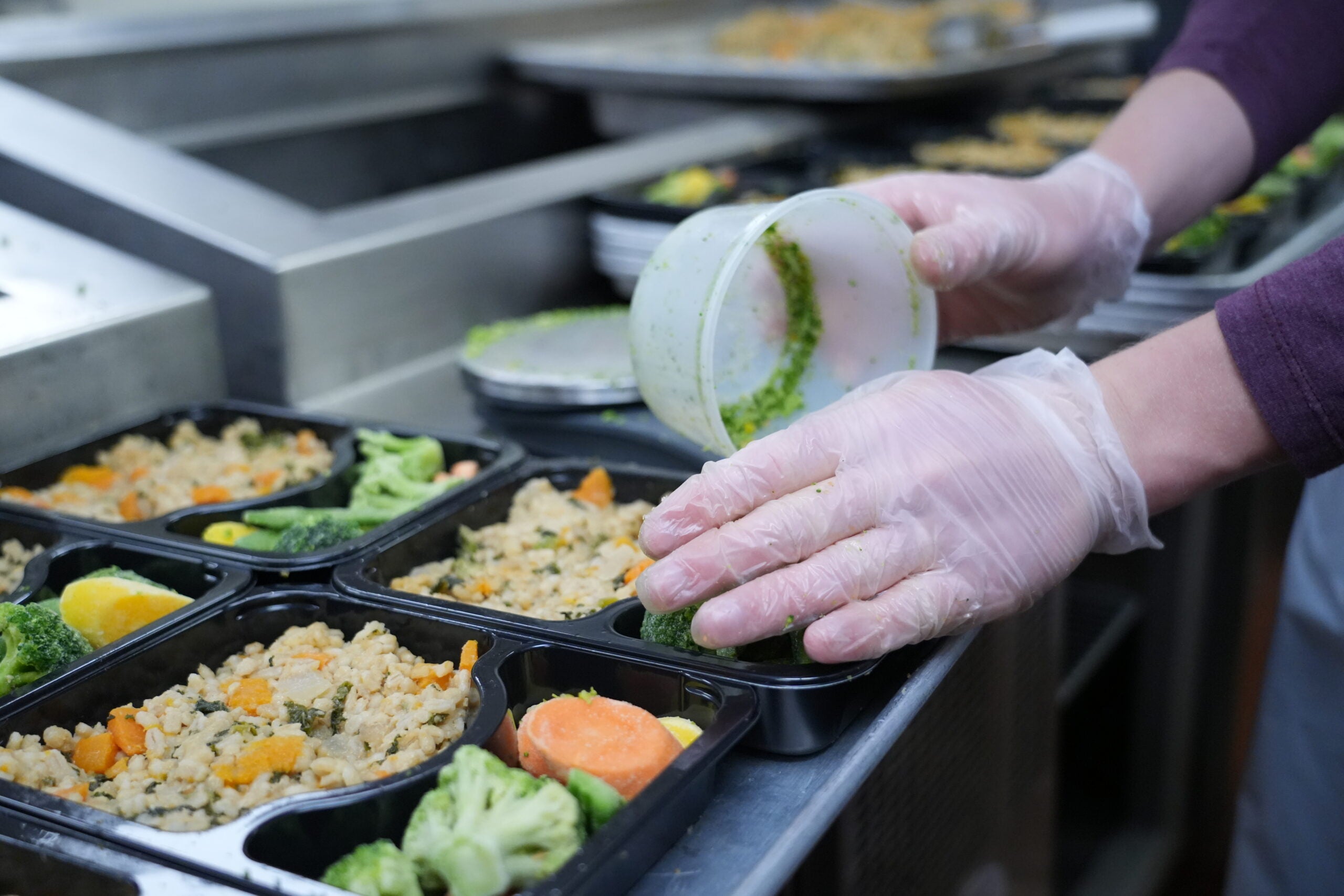
That’s when Community Servings came in. A grantee of The Rockefeller Foundation, Community Servings provides medically tailored, nutritious meals to chronically and critically ill individuals in Massachusetts and Rhode Island. Self began to receive pre-portioned meals, snacks, and soups delivered to his door each week.
What’s more, Community Servings gave Self delicious meals he actually wanted to eat.
“They have such an incredible variety of fish that they use,” he says. “And it’s healthy; it goes with my diet.”
Self’s “cardiac/diabetic” meals from Community Servings also healed him: Self lost 50 pounds, went from 14 medications a day down to four, saw his A1C levels go from 13 to 4.1 — and he no longer faced an amputation. When Self’s surgeon asked him what he was eating, Self brought the doctor a bag of Community Servings meals, snacks, and soups.
“He went out of his mind,” Self says. “He said, ‘This is the best thing I’ve ever seen!’”
Community Servings, based in Boston, makes and delivers 1.2 million meals every year reaching 8,000 unique clients, dependent children, and caregivers across Massachusetts, Rhode Island and southern New Hampshire. That includes 17 discrete diet tracks, which create 120 unique diet combinations when overlayed—all delivered to people with chronic and complex health problems. What’s more, they are doing so with locally sourced foods from New England farms and fisheries. It’s a unique effort in which every aspect of the organization is run with utmost attention and constantly tweaked for efficiency and ideal outcomes. This takes an incredible amount of raw data—from the impacts on the local economy, to clients’ health outcomes, to a dizzying number of measurements across every part of the kitchen.
It’s also why Community Servings has an entire arm of the organization, the AMPL (Access to Medically Tailored Nutrition through Policy and Leadership) Institute, devoted to research, policy, and provider education — an innovative branch of a nonprofit otherwise devoted to direct service. The AMPL Institute is how the Community Servings team knows that working with local vendors is a valuable approach to procurement; how they know that creating menus to address and improve the health of people with a variety of complicated diagnoses really works; and how they know that medically tailored meals could change the course of healthcare writ large.
In fact, there are two parts to Community Servings’ mission and both are based on data: (1) provide medically tailored nutrition to critically and chronically ill individuals and their families, and (2) advance access to medically tailored nutrition and advocate for reimbursement within Medicaid, Medicare, and commercial health insurance.
By the Numbers
- 0
clients, dependent children, and caregivers served this year
- 0%%
reduction in
emergency department visits for people who received medically tailored meals
- 0StatesStates
including Massachusetts
fund medically tailored meals for eligible individuals through Medicaid Section 1115 demonstration waivers
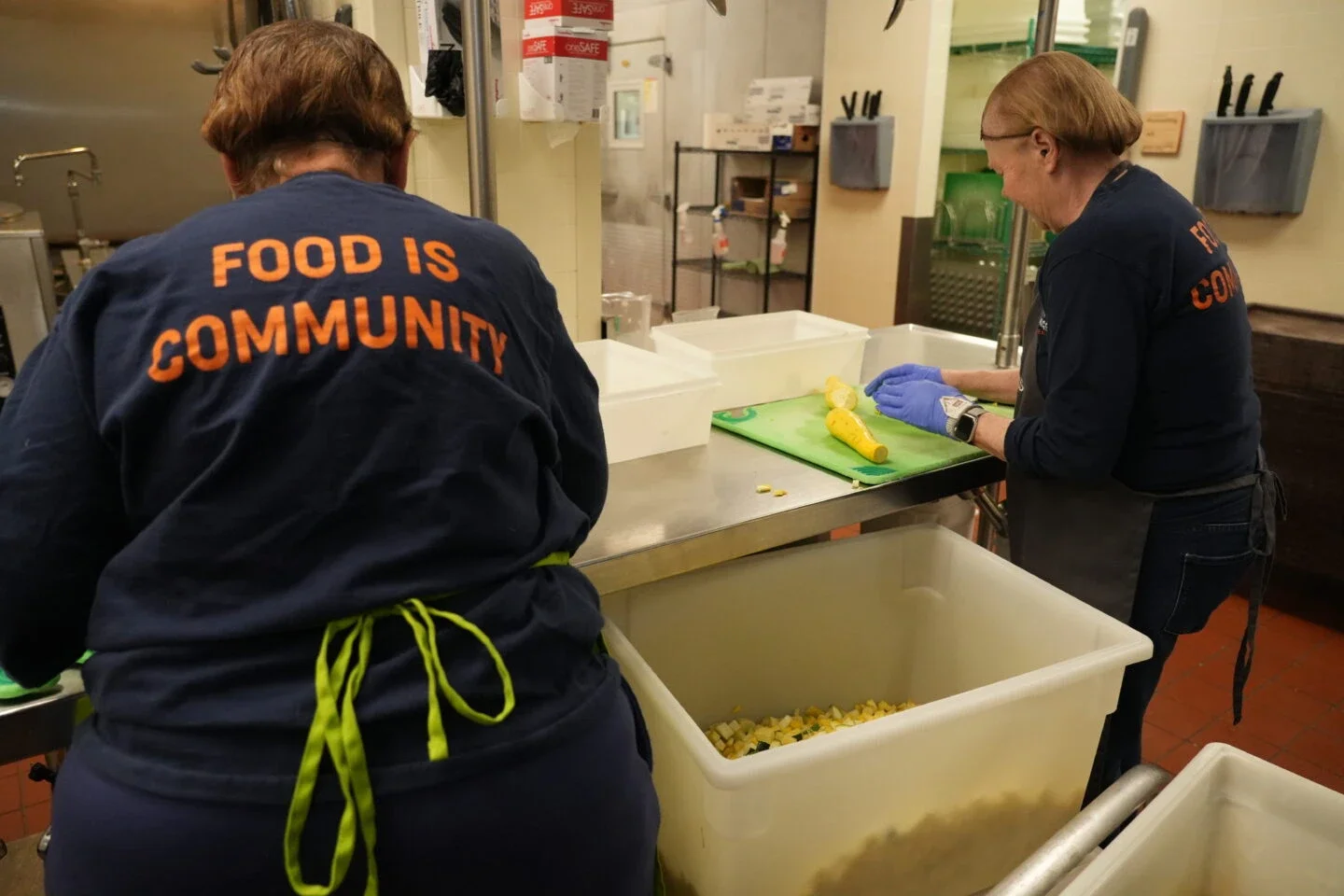
Indeed, the right foods, in addition to managing diet-related diseases, could have beneficial effects on cancer patients and high-risk pregnancies, too — adding to the potential for more healthcare savings. Of course, actually preparing bespoke meals for broad swaths of health conditions requires a highly efficient, nimble kitchen. It means making approximately 1,000 pounds of mirepoix — a mixture of carrots, celery, and onions — each week, because it’s a versatile base for a variety of recipes. It means working in partnership with healthcare providers and staffing in-house registered dietitian nutritionists. It means considering portion size, seasoning, and unwavering accuracy to produce medically tailored meals at scale. But perhaps the biggest consideration for Community Servings is flavor.
“When you can get talented people who make the food so that it has flavor and taste,” Self says, “you look forward to the meals.”
Community Servings’ meals — like salsa verde fish, chicken primavera, quinoa confetti salad, and ginger bok choy soup — are delicious by design: After all, medically tailored meals won’t work if people don’t want to eat them.
“There’s no culinary austerity here,” says Community Servings Chief Culinary Officer Brian Hillmer. “You have to meet people where they are, and that means flavorful, delicious food.”
The results speak for themselves: Since connecting with Community Servings, Steve Honyotski, who has multiple health issues, including diabetes, lost 30 pounds, his insulin is down 33 percent, and he has more energy.
“To know that I’m going to have a good meal no matter what’s happening with different systems of my body is a reassurance and a comfort,” says Honyotski. “I’m lucky to be alive and Community Servings meals and delivery makes it happen for me — and I have a wonderful soup to look forward to.”
Honyotski has also learned what portion sizes look like.
“I suffer from portion distortion, and it is very hard to cook for one person,” he says. “But the meal in front of me is the reality.”
It’s what Hillmer calls “recalibrating expectations around palate and portion size.” Many clients come in with a preference for salt, sugar, and fat — all of which can dampen one’s desire for fresh foods. As he puts it: “The palate loses access to simple, beautiful flavors.”
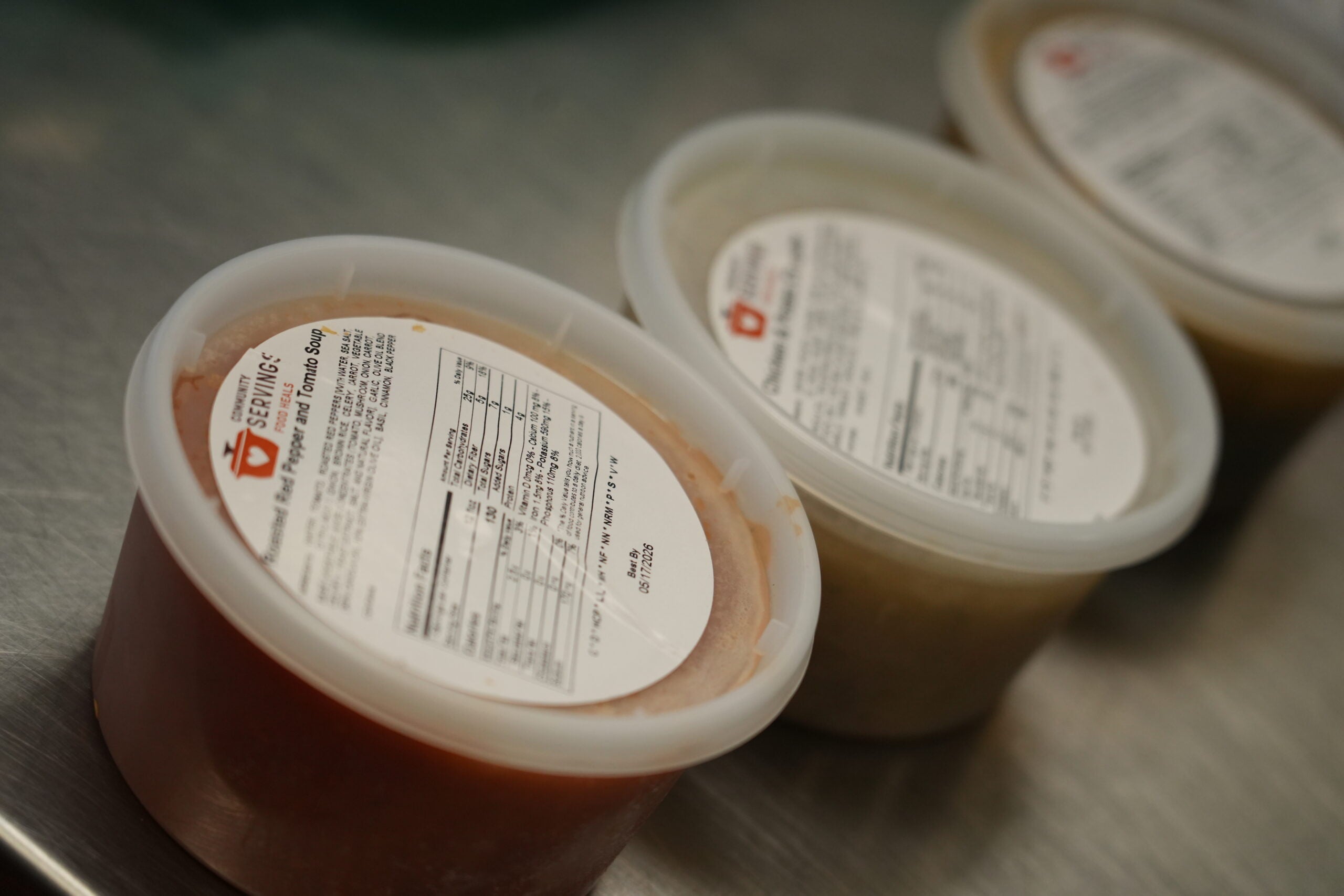
“We’re cooking the way our grandparents cooked,” says Waters. “And how your doctor wants you to eat.”
Community Servings offers access to nutrition education resources and one-on-one telephonic counseling to help their clients continue to cook healthily for life. These wraparound services create a kind of “osmosis,” says Waters, whereby people start to unconsciously gravitate to healthier foods.
At Community Servings, education isn’t just for individual clients. There’s also a Food is Medicine Coalition Accelerator and a Teaching Kitchen for food-service job-training. Because Community Servings has become the gold standard in the Food is Medicine space, other organizations look to them as a model. So, the Accelerator program, which Community Servings co-leads, shows other organizations around the country how to have the greatest impact in their own regions. And, because these and other Food is Medicine providers will need experienced cooks and service workers, Community Servings is teaching a new generation of food industry employees how to create intentional, healthy, and locally sourced meals.
“Food, in some ways, is the easy part,” says Hillmer.

“The Northeast has some of the best fishing grounds in the country — in the world,” he says.
Twenty years ago, Auerbach launched Red’s Best with an idea: Could he bridge the supply and demand sides of commercial fishing with new technology — and be competitive with some of the biggest players in that arena? He could. Auerbach became a kind of oceanic matchmaker — finding out what the fishers caught, what various clients wanted, and made connections.
The information he collected gave the company an edge: Auerbach realized that with a detailed database of a diverse network of buyers, he could sell anything a fisher brought in. Whether blood clams and cod or periwinkles and haddock, Red’s Best had a buyer.
“There is no bad fish,” Auerbach says. “We take whatever lands. We take the entirety of a fisherman’s catch. We know where to send the tuna versus the pollock.”
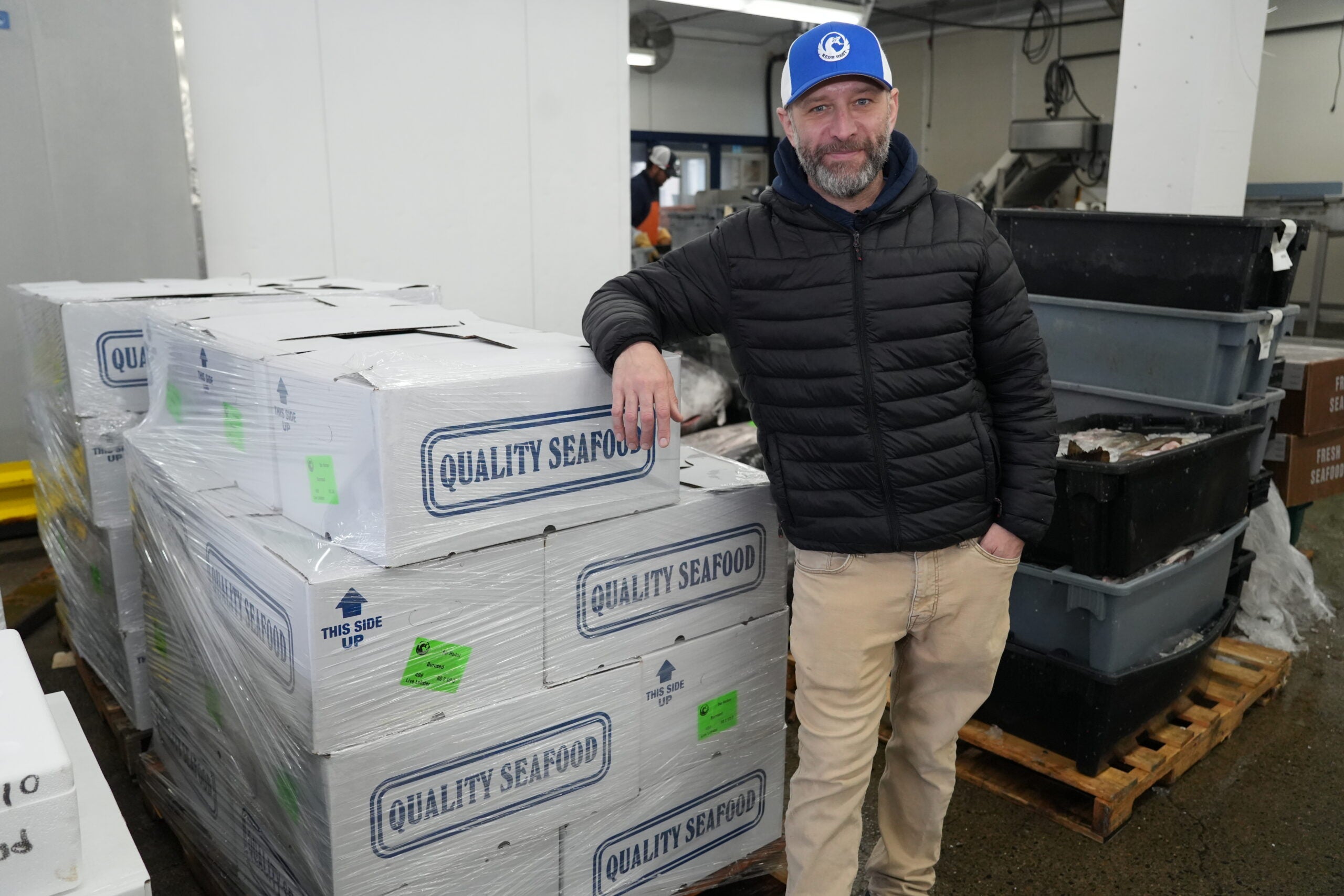
Red’s Best Founder and CEO Jared Auerbach
Using data as a “window into the supply chain” allows Red’s Best to guarantee the total purchase of any given haul due to his “consistent source of flexible demand.” As a result, because they aren’t searching for specific species (or ditching caught species they don’t have orders for), fishers can reduce their time at sea, which in turn maximizes their profitability.
“We’re so proud of our relationship with Community Servings,” says Auerbach. “Fishers are literally risking their lives and also making all the upfront investments. The least we can do is assure them of a consistent, steady market for their haul.”
One of Auerbach’s consistent sources of flexible demand is Community Servings.
“We’re looking for healthy, local aquatic proteins,” says Hillmer. “We want to open our clients’ palates to new species.”
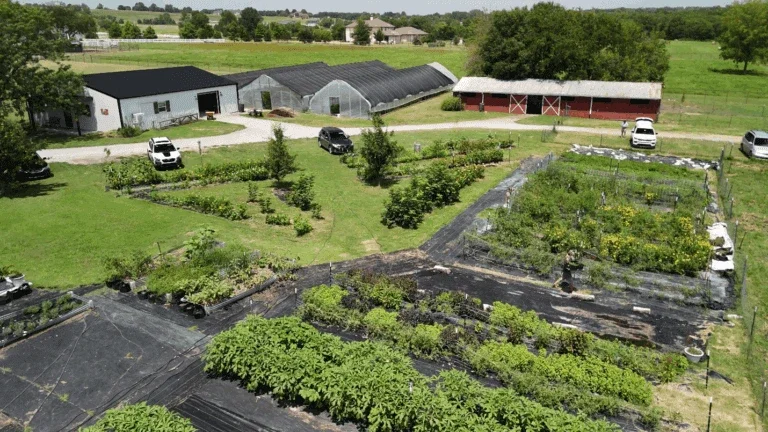
It’s an ethos that dovetails perfectly with Community Servings’ community-centered food sourcing strategy. And it’s not just fisheries. There’s Robie Farms, which offers pasture-raised cows using the “HGAL” standard: humanely raised, growth hormone-free, all natural, and locally grown. It’s healthier than the conventional supply chain and promotes a lighter environmental footprint.
Community Servings’ commitment to locally sourced food thus creates a moral feedback loop. Community Servings makes good use of a wide variety of fish species, cuts of beef, or vegetables; this supports sustainable local fishers, farmers, and growers, which in turn boosts the local economy, and that ultimately supports chronically ill clients. The whole region benefits.
It’s why Community Servings is also dispelling misconceptions about sourcing: People often feel that local and high-quality food is inaccessible to the average person. But at Community Servings, sustainability and health impacts all come together. The organization also demonstrates that mission aligned, high-quality, local food — not the lowest-cost foods — is the best solution.
“We’re showing that with real respect for the food and the local farmers or fishermen, we can make the business argument for food is medicine,” says Waters. “It’s why I believe that Medicare and Medicaid will reimburse medically tailored meals within the next five years. The virtuous circle is sustainability, fair prices, and good values — it’s all part of the larger argument.”
Data Driven
One of the people helping Community Servings make that argument is Colleen Dagley, a senior research project manager at the AMPL Institute, which is right on the Community Servings campus. In partnership with academic researchers across the country, Dagley evaluates the health impact of medically tailored meals to drive change within Community Servings and nationally, as well.
“We are an internal team of data researchers working in a living laboratory,” she says. “We are making the case that the right food — not just alleviating hunger — matters.”
Indeed, as with Red’s Best, data and research drive everything Community Servings touches. What’s the nutritional value, which foods have the most impact, what kind of environmental footprint does the vendor have, how are the animals treated, which strategies make a difference? That data influences every client Chef Hillmer serves, every vendor he purchases food from, and every recipe he creates.
“Like any company that makes medicine,” says Waters, “an in-house research program leads to the most impactful interventions.”
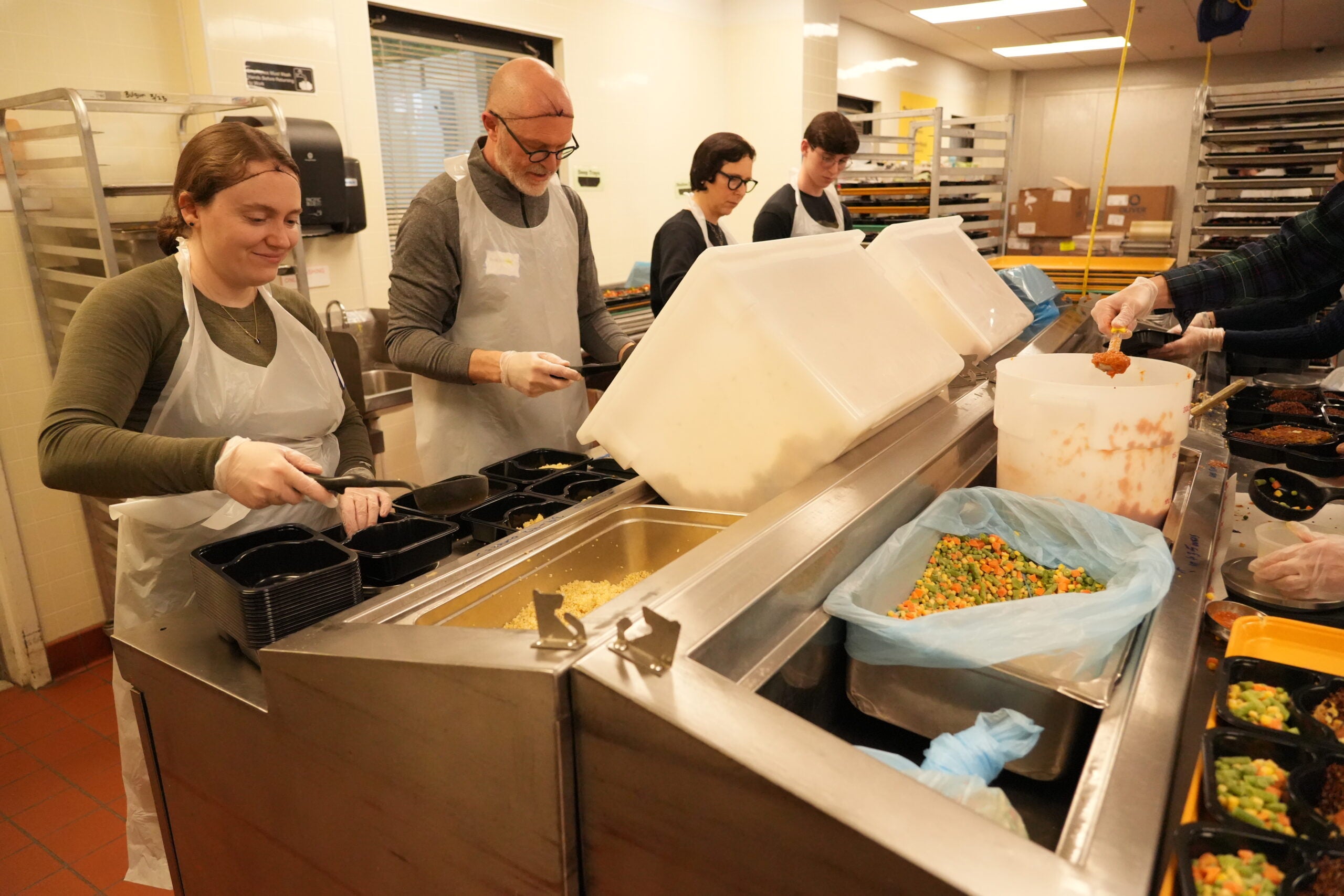
Community Servings is on the vanguard of Food is Medicine’s qualitative and quantitative work. Its AMPL researchers are engaged in six studies on the health impacts of medically tailored meals through grants from the National Institutes of Health and other funders – a combination of internal studies, randomized controlled trials and evaluations with partners at the University of North Carolina School of Medicine, Tufts University Food is Medicine Institute and UMass Chan Medical School.
What’s more, the Community Servings’ research doesn’t just drive day-to-day operations. It influences policy. Senior Director of Policy and Research Jean Terranova has testified before Congress on the value of integrating medically tailored meals into the national healthcare system. And AMPL’s findings have been on the frontlines of innovations in Medicaid to create access to medically tailored meals through Medicaid Section 1115 demonstration waivers. Currently, 13 states cover meals under these waivers. AMPL’s central policy objective is to make medically tailored nutrition an established benefit in Medicaid and Medicare.
Community Servings launched the AMPL Institute to make the case for funding. Now, they are helping the rest of the nation follow suit.
“The Rockefeller Foundation is so important because they see the need to take this work nationally and globally,” says Waters. “It can be hard to think about the farmer and the fishermen when we’re just trying to deliver meals to people. But Rockefeller gets that Food is Medicine is part of the total solution.”
Of course, having the data is what makes this work truly scalable. It’s why Community Servings is one of seven Food is Medicine implementers that the Foundation backs who are also supporting local suppliers to contribute to jobs, local economic development, and sustainable food systems.
But for clients like Self and Honyotski, Community Servings isn’t a global movement for systems change; it’s a lifeline. Or, as Honyotski puts it, when someone provides you with the right diet, “food is nourishment and love.”