All Grantee Impact Stories / All Grantee Impact Stories Grantee Impact Story

The Indigenous Women Leading Brazil’s Rainforest Recovery

Members of the Guajajara Indigenous Community at a coming-of-age ceremony

“I never thought the river would need help,” said Kariamora Santana Guajajara. “But the time has come to help…to reforest, to respect, to care. If we do not care for it, everything will disappear.”
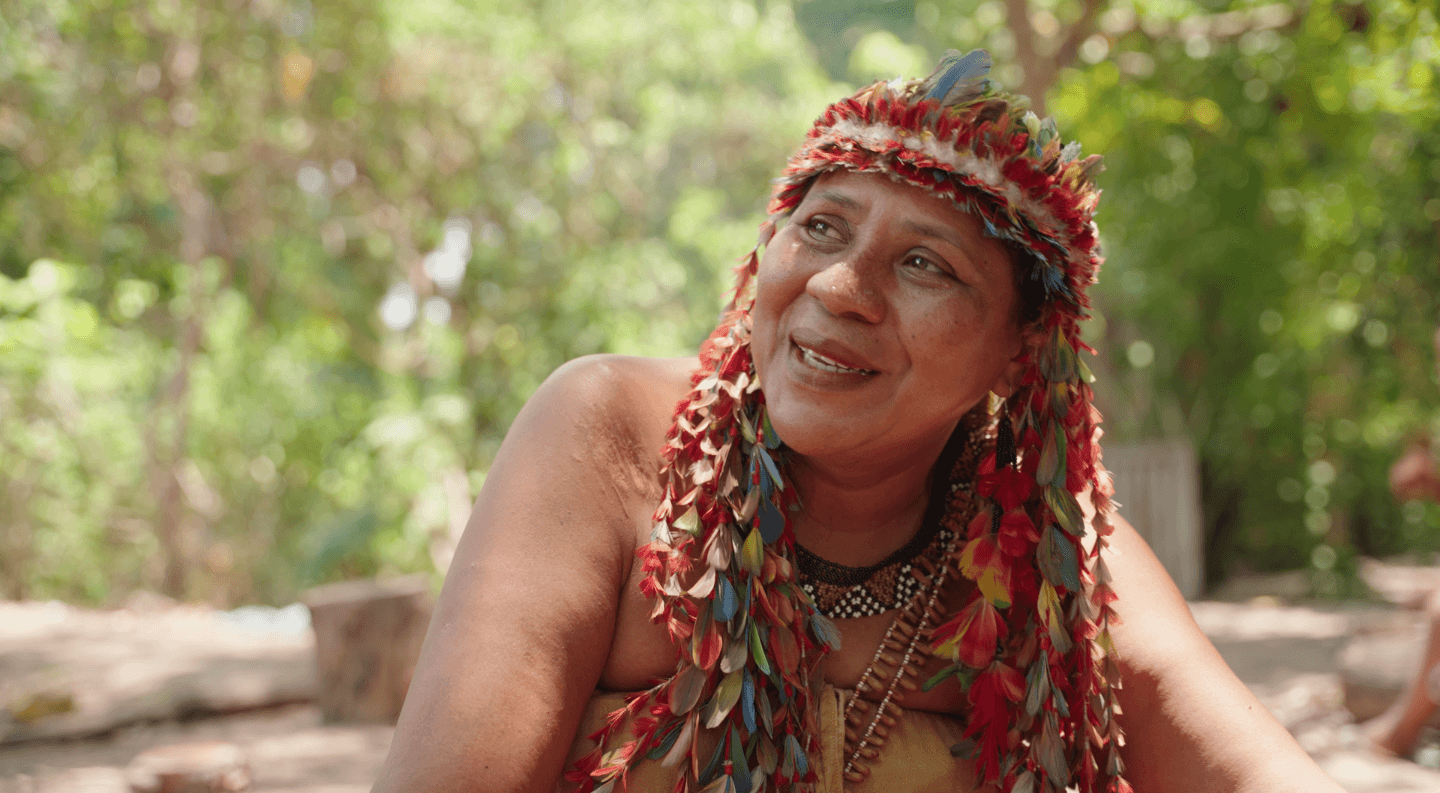
Suluene Santana da Siliva, member of the Guajajara Indigenous Community and president of Instituto Makarapy

Kariamora Santana is a midwife and the matriarch of the Guajajara Indigenous Community in the Araribóia region of Maranhão, north-eastern Brazil. Over the years, she has witnessed the rivers drying up, the animals retreating, and the health of the forest slowly deteriorating.

The region has been devastated by forest fires in recent years. In 2024 alone, 70% of the Araribóia Indigenous Land was affected by fires, caused in part by illegal logging and cattle ranching, which impacted biodiversity across the 413,000 hectares (1.02 million acres) of territory.

The Guajajara community is feeling the impact firsthand. Kariamora and her daughter, Suluene Santana da Siliva, set out to address it.

“There have always been fires but they worsened in 2007 when the forest was already being devastated by illegal loggers,” said Suluene.

That same year, tensions between these illegal loggers and the Guajajara resulted in violence and ultimately led to establishing a commission of Indigenous Chief Leaders working to protect the land. By 2008, they had invited Suluene to join their movement.

“Since then, I’ve been walking with the leaders — not in front, but alongside, bringing the knowledge we study in school and combining it with the elders’ wisdom,” said Suluene.
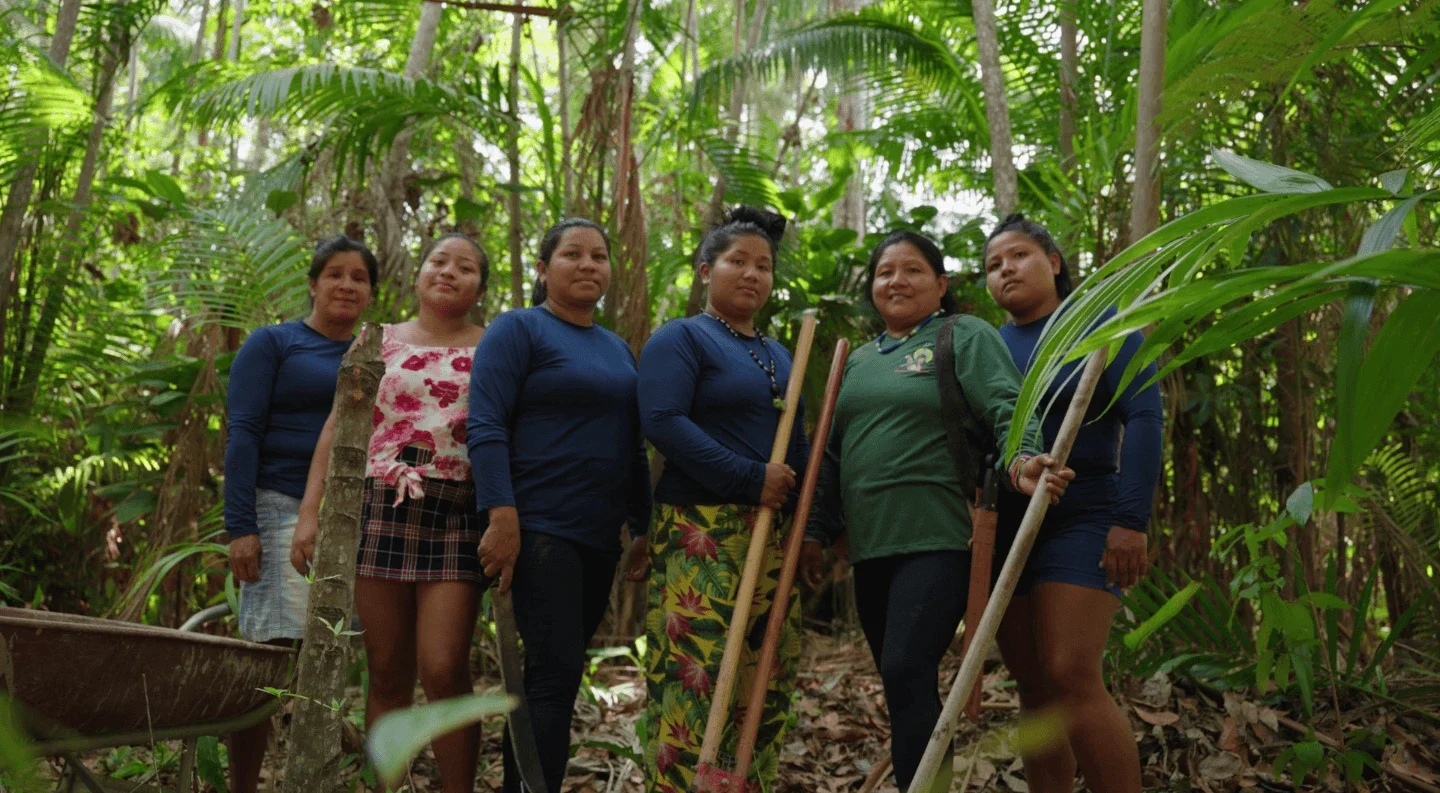
  • Members of the Guajajara Indigenous Community

Suluene’s community ties and ancestral knowledge enabled her to become the president of Instituto Makarapy, a non-profit focused on environmental and community aid across Indigenous land. In partnership with the Indigenous Chief Leaders, the two groups worked together to support the Guajajara to establish nurseries to remove struggling seedlings, revive, and reforest them.

In seven communities across the Araribóia Indigenous Land, women-led coalitions of Guajajara forest guardians have established nurseries to reverse rainforest deforestation. As their efforts expand, they look to organizations like Health In Harmony (HIH), a Rockefeller Foundation grantee, for support.

HIH is driving capital to local communities in rainforests across Brazil, Indonesia, Madagascar, and Panama by helping them protect and restore biodiversity to enhance carbon storage, water resources, and overall ecological health. In Brazil, they are working alongside Indigenous groups to directly finance ethical nature-based solutions like bio-credits and community-led carbon crediting.

Indigenous Peoples and local communities have safeguarded the forest for millennia through traditional knowledge and stewardship, but they receive less than 1% of climate funding — something HIH is trying to address.

“For HIH, we believe the initiatives by Indigenous People themselves are the most effective ways to combat climate change,” said Daniel Tiberio Luz, Brazil Director of SAMA-HIH (HIH’s Brazilian affiliate). “It shows that Indigenous-led solutions not only have an impact on biodiversity, but that it also leads to opportunities to commercialize sustainable products, forest protection and reforestation efforts through biodiversity and carbon credits with Indigenous Peoples leading on decision making.”

Community-led carbon crediting models center Indigenous People in projects that reduce or capture carbon emissions — allowing them to directly benefit from monetizing the credits. To establish viability of these models, HIH is working in partnership with Woodwell Climate Research Center to develop a Landscape Capital Index (LCI) that provides monitoring and analysis of climate, carbon, biodiversity and community impact data. Using on-the-ground research, satellite imagery, and AI, this tool tracks the health of rainforests — spotting threats, measuring stability, and identifying where conservation investment is needed most.

In tandem, HIH is working with ECCON Soluções Ambientais, an organization that provides environmental consulting, decarbonization, and carbon project development services. With support from HIH, ECCON is working beside Indigenous communities on the development of carbon credits that embed the safeguards required by Indigenous Peoples beyond Free, Prior and Informed Consent (FPIC).

By working alongside Woodwell Climate Research Center and ECCON Soluções Ambientais, HIH is building trust within Indigenous communities and in community-designed solutions.

The Guajajara nurseries are in the early stages of growing reforestation seedlings for the territory and adjacent communities. The seedlings also provide food and medicine, which simultaneously benefits the forest ecosystem. Previous studies show that these efforts can return a minimum of 12X on investment in community-designed solutions.

This means for every dollar invested in communities, they return $12 to the planet in averted carbon dioxide emissions.
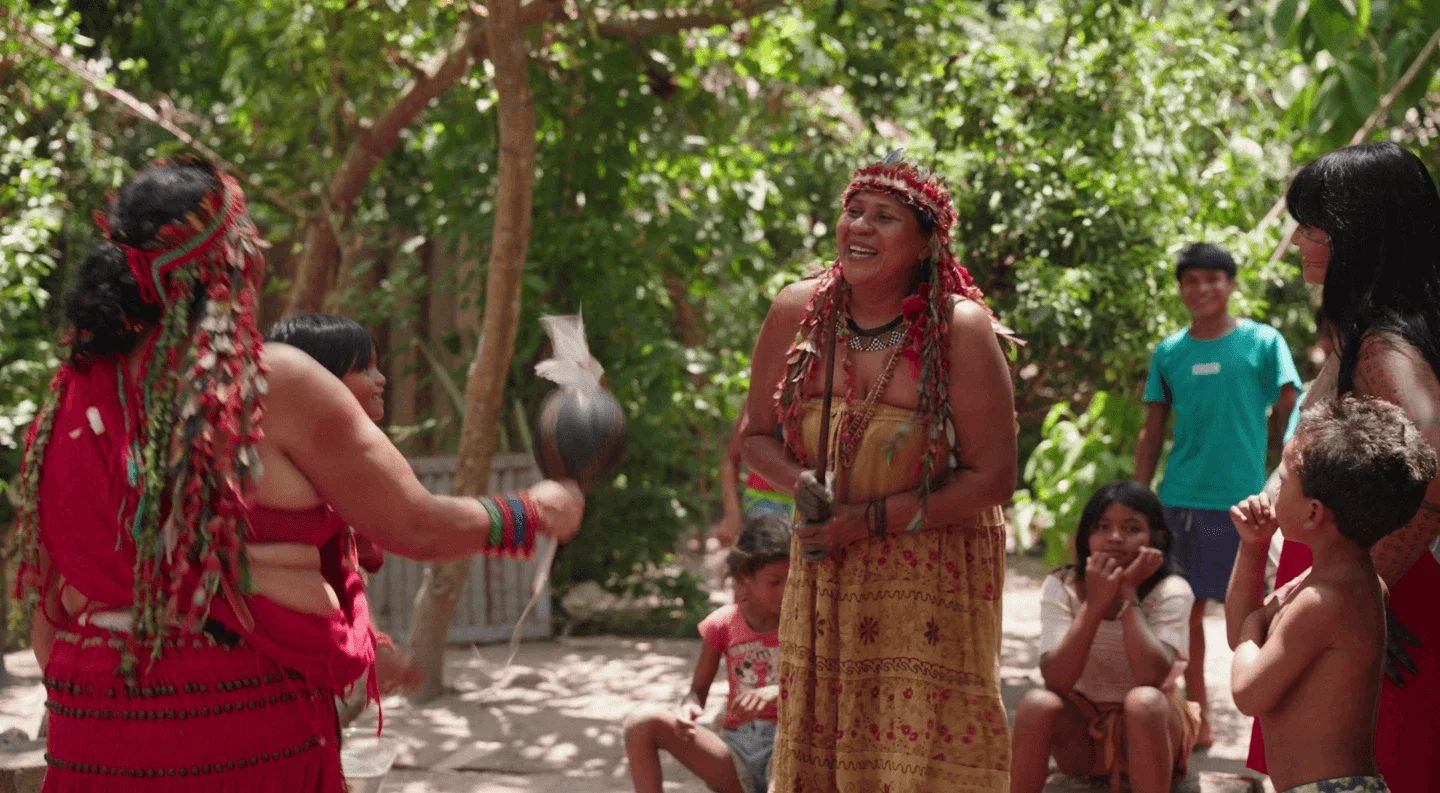
These nurseries grow a variety of native seedlings including shrubs that capture and create moisture, ultimately hydrating dry plants and lowering risk of wildfires. And when the trees are protected, so is the ecosystem that feeds Indigenous cultural practices.

“Our ceremonies depend on the standing forest, on the surrounding fruit, and on the shade. If we don’t have the materials for the ceremony, the culture is weakened,” said Suluene. “But if we reforest, and we have the trees, we have the birds, the animals, the river…we will revitalize together with the forest.”

Ultimately, HIH hopes to advance the field of biodiversity monitoring and biodiversity credit markets, a nascent and under-invested impact area with increasing importance on the world stage. COP30, in Belem, Brazil, acknowledged the importance of Indigenous knowledge and direct financing as pillars to combating climate change. It featured the largest Indigenous participation in the history of the conference, with members of the Guajajara in attendance.

“Our efforts are not just for those in the Indigenous territory, because we know this air is carried beyond our community. This preservation will positively impact everyone,” said Suluene. “The reality we have here is the reality we want for the world.”

  • Members of the Guajajara Indigenous Community

Read More