The G20 plays an integral role in creating the policy and finance pathways and necessary market signals for public and private investment that advance country-led climate-health initiatives.
In this Think20 (T20) Policy Brief, The Rockefeller Foundation, in partnership with the Green Climate Fund, Global Fund, WHO, and the COP28 Presidency, lays out four policy recommendations for G20 Members to consider to address the insufficient, fragmented, and inaccessible financing that currently jeopardizes climate action to protect health and to increase the core policymaking and implementation capacities to increase the scale, quality, equity, and impact of financing climate and health solutions.
The paper was accepted and published by the Think20, a G20 engagement group that brings together think tanks and research centers from G20 members and guest countries and organizations.
Read the Full Report
More Reports

 ReportAn American Perspective on Foreign Aid New research from The Rockefeller Foundation and Echelon Insights finds that Americans continue to support foreign aid programs that prevent disease outbreaks, respond to humanitarian crises, reduce conflict, and create economic opportunity — with broad bipartisan support for strengthening what works rather than eliminating these programs.
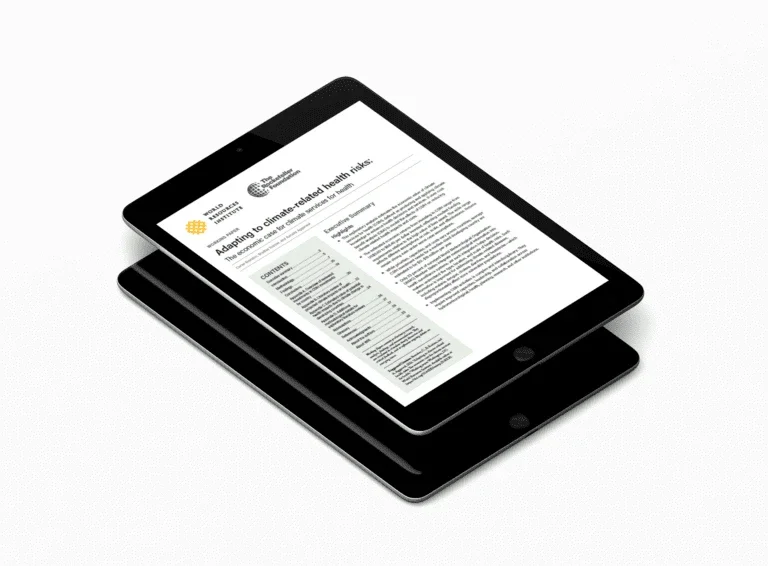 ReportAdapting to Climate-Related Health Risks: The Economic Case for Climate Services for Health New research from World Resources Institute, commissioned by The Rockefeller Foundation, finds that investing in climate services for health can help low- and middle-income countries save lives, strengthen resilience, and generate major economic returns.
 ReportA Mandate for International Cooperation: G20 Popular Opinion on Global Action A follow-up survey of nearly 20,000 people across 18 G20 countries reveals strong support for international cooperation, with 60% willing to accept national compromise to solve global challenges. Preventing wars, providing access to food and clean water, and tackling climate change topped the list as priority issues for respondents. Read the latest survey for more.