The current pace of innovation in the battery space suggests a growing share of demand could be met by a combination of renewables and batteries by 2050, with the remainder covered by clean, firm power.
Building Independent Supply Chains
The report emphasizes building an independent supply chain, where battery cells, components, and modules are manufactured domestically or within a given region, as a key opportunity for LMICs. This could include technologies like sodium-ion batteries, which can provide daily storage that absorbs excess generated energy during the day and discharges it during peak hours. Analysis shows that sodium-ion batteries would have fewer supply chain constraints partly because sodium carbonate is a far cheaper, more abundant battery material compared to lithium carbonate, which is geographically concentrated in specific regions and presents extraction challenges.
Meanwhile, there are a variety of medium-and-long-duration storage technologies on a plausible but long path to $20/kWh, a fraction of what current battery deployment costs today. Maturing technologies like iron-air batteries, compressed air energy storage (CAES), and liquified CO2 all fall into this category. However, they should remain a secondary priority — ready to scale up once long-duration storage is needed.
India: Primed for Deployment
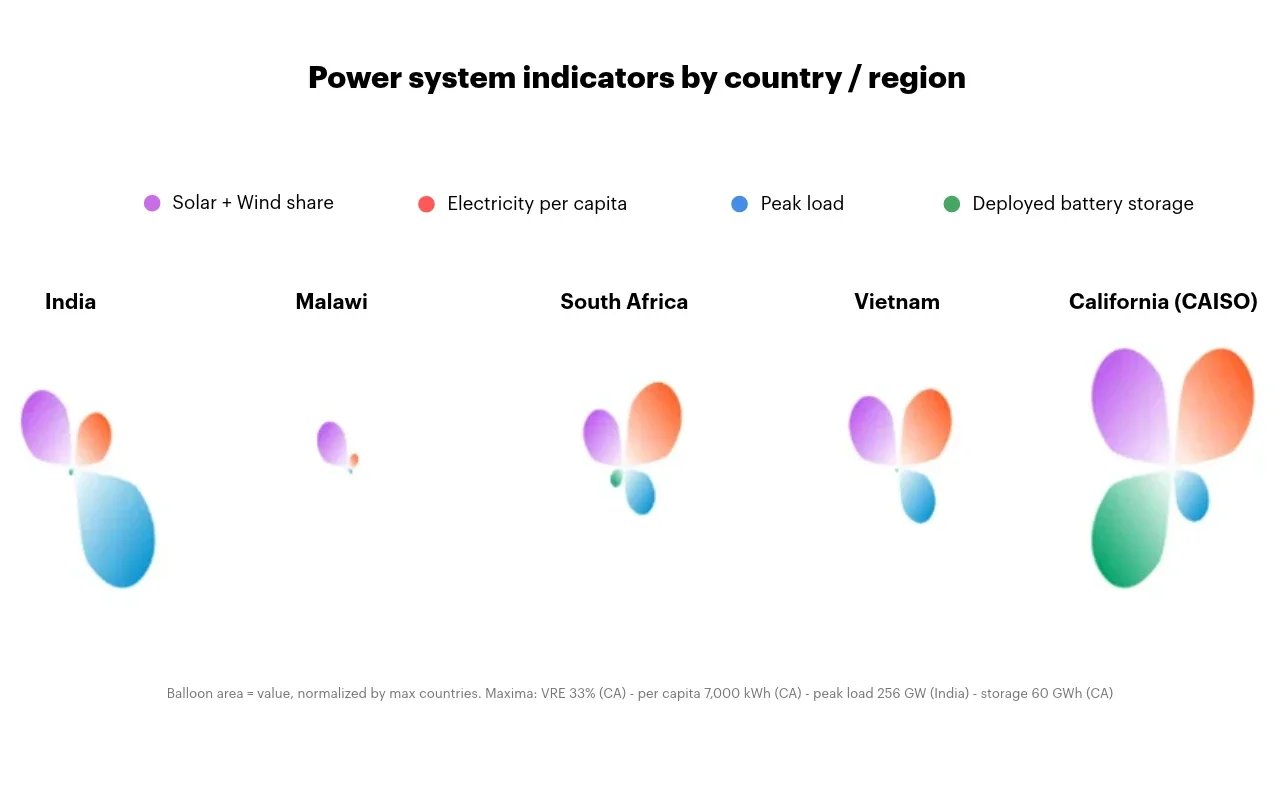
This work found that India is particularly primed for deployment. It has the largest electricity demand among the LMICs, and yet very little energy storage is connected to the grid today. Interviews conducted by Powerhouse Innovation with energy storage startups found that many view India as one of their most exciting expansion markets. Some of the largest Indian companies have invested in short-duration sodium-ion batteries while another is building a 20 MW / 160 MWh project for the largest power company in India. While other LMICs could be good testing grounds for new energy storage technologies, India presents a particularly strong combination of scale, policy, ambition, and a strong desire to develop independent supply chains.
Batteries for Improved Energy Access and Affordability
Two-to-four hour-duration grid-scale batteries can go a long way to improving electricity reliability and enable interconnection of more renewables, especially solar. Making these batteries easier and cheaper to manufacture will make them easier to deploy at scale. The end result is cheaper electricity — helping to drive universal energy abundance and provide energy access to people who don’t currently have it. UEA aims to deliver enough energy to all populations to not just survive, but to thrive.