School feeding programs are among the largest and most effective social safety nets in the world. More than 466 million children receive at least one meal at school each day. These meals improve nutrition, fuel students’ learning, and strengthen local economies — acting as a powerful policy lever to support local food systems and smallholder farmers.
New research from Stanford University, supported by The Rockefeller Foundation, provides the first empirical evidence that the climate crisis is quietly undermining our ability to deliver school meals to children worldwide. Rising temperatures, shifting rainfall patterns, and increasing climate variability are hurting yields and driving up the costs of the food that supplies these critical programs.
Yet the research also points toward a promising solution. Shifting to regeneratively-sourced meals could stretch existing program budgets to reach nearly 8 million more children each year. Further, pushing for more diverse foods on school plates would boost the climate resilience of these programs and make for more nourishing, nutritious meals for children across the globe.
Read our summary of key findings:
Download PDFThe full working paper can be found on Stanford’s website.
More Reports
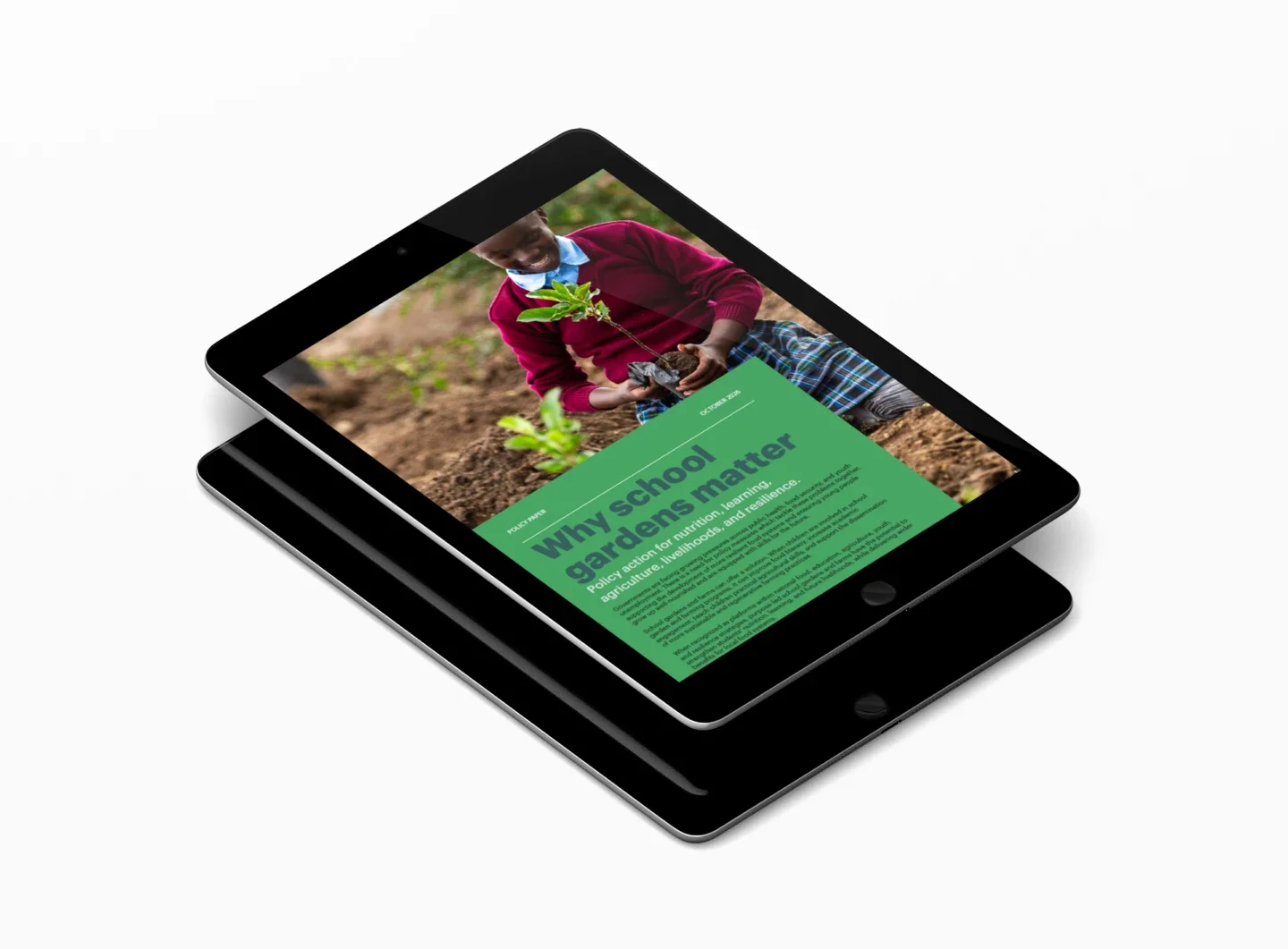
 ReportWhy School Gardens Matter This report explores how school gardens and farms can improve nutrition, enhance learning, build agricultural skills, and strengthen resilient food systems through integrated policy action.
 ReportSeeking Security and Opportunity in a Stormy World: A 34-Country Survey The 2026 survey finds that while nearly seven in ten people across 34 countries believe the world has gotten worse, support for countries working together remains strong, with preventing wars and conflicts emerging as the top shared priority.
 ReportFrom Farm to FIM: The Economic Impact of Local Food is Medicine Food is Medicine programs can improve health while generating $45 billion in economic activity nationwide and creating new opportunities for local farms and communities. Learn more about the findings in the report.