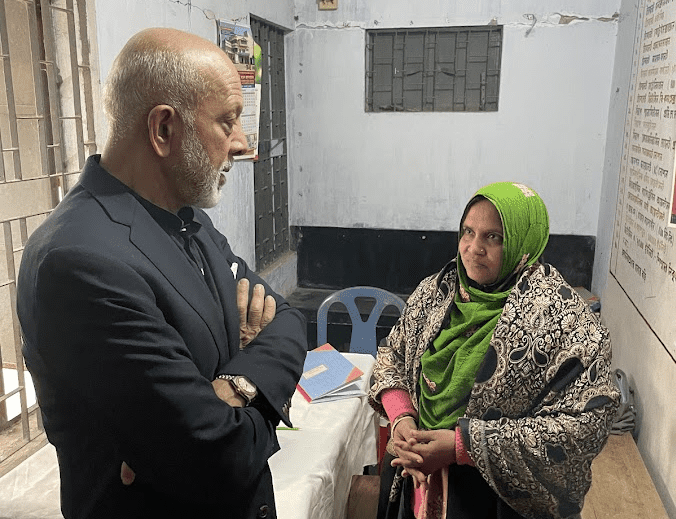
Naveen Rao, Senior Vice President of the Health Initiative at The Rockefeller Foundation, gets a firsthand account of how extreme heat is affecting outdoor workers from a healthcare worker dealing with it daily.
The impacts of extreme heat also quickly ripple across all aspects of society, something these women had experienced firsthand. When they fell ill from toiling in the hot sun, they lost wages and struggled to feed their families. When temperatures soared above 42°C / 108°F and shut down schools, their children missed out on precious learning time. Heat doesn’t just threaten health — it disrupts livelihoods and daily life for families and entire communities.
For farmers like Promila, the impact of extreme heat is deeply personal. But taken together, these losses compound into a much larger national challenge.
In 2023 alone, Bangladesh lost close to 26.5 billion potential labor hours to heat — nearly two-thirds of them from agricultural workers. (Source: Lancet Countdown)
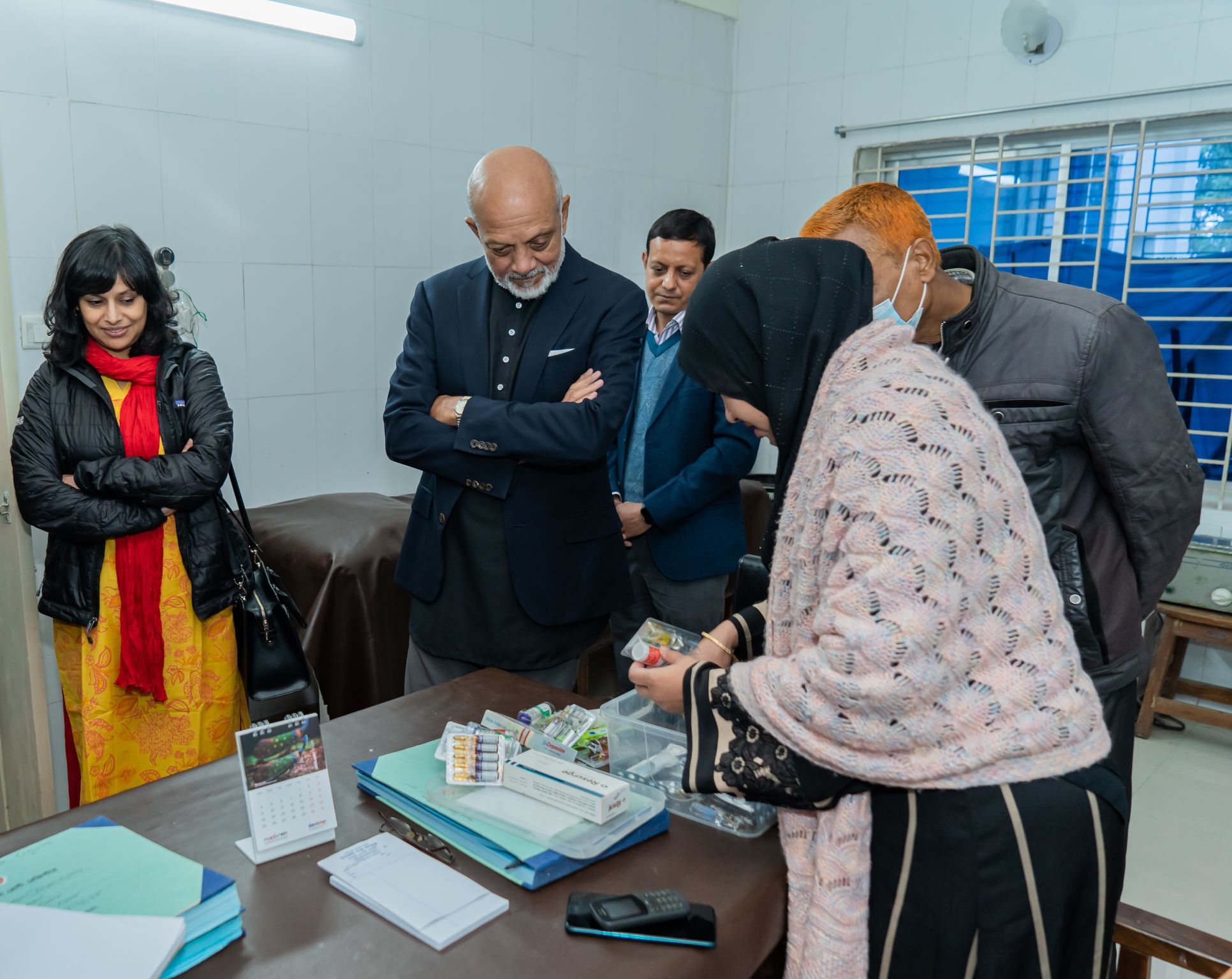
Members of The Rockefeller Foundation Health team visit a clinic in Rajshahi, Bangladesh, where healthcare workers are on the frontlines of a rising threat — heat stress — and finding ways to respond. (Photo courtesy of icddr,b)
As we talked, the conversation turned to solutions. I asked a simple question: if farmers could see heatwaves coming, would it make a difference? The answer was unequivocal: it would change everything.
Early insights drive action. With the right information, they can shift work away from the hottest hours, wear more protective clothing, and carry more water to avoid dehydration. Small adjustments, informed by timely information, can keep them from falling dangerously ill.
The solution is simple. But making it a reality requires a whole-of-society response; one that brings together technology and insights from the agricultural, health, and meteorological sectors alike. In Bangladesh, a novel project called HeatShield is already demonstrating what that can look like in action.
As heat waves began impacting crop yields and worker productivity in recent years, the government’s Department of Agricultural Extension partnered with the icddr,b (a Rockefeller Foundation grantee), the Directorate General of Health Services, the Bangladesh Meteorological Department, and the Regional Integrated Multi-Hazard Early Warning System (RIMES) to address the problem together. The result is a first-of-its-kind, comprehensive program to help farmers navigate extreme heat.
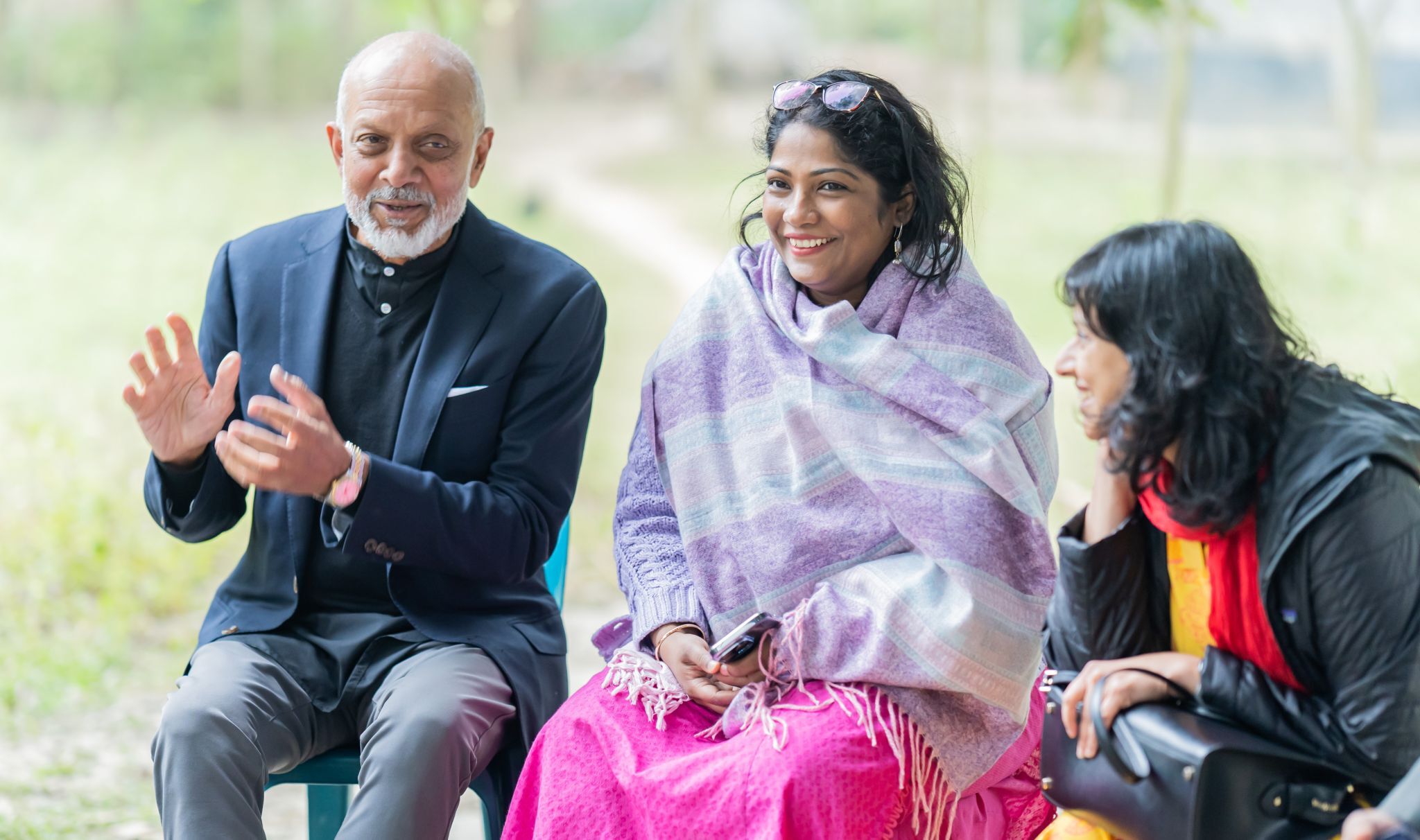
From left to right: Naveen Rao, Senior Vice President of the Health Initiative at The Rockefeller Foundation; Dr. Farjana Jahan, Associate Scientist, Environmental Health Division, icddr,b; and Manisha Bhinge, Vice President of the Health Initiative at The Rockefeller Foundation, on a field visit near Rajshahi, Bangladesh. (Photo courtesy of icddr,b)
At its core is a dedicated heat alert system integrated into the government’s BAMIS (Bangladesh Agro-Meteorological Information Service) platform and mobile app. It doesn’t just forecast dangerous temperatures — it translates them into practical, life-saving guidance. Farmers receive early warnings that heat is coming, alongside clear advice on how to protect themselves. To maximize impact, the app is accompanied by an AI-powered chatbot and in-person trainings to help agricultural workers recognize signs of heat-related illness, as well as support to health facilities so they can be better equipped to diagnose and treat patients quickly.
Today, HeatShield is piloting protection for up to 300,000 farmers, demonstrating how early warnings, localized advisories, trainings, and tailored health services can reduce heat risk at scale. Designed for national rollout, the model has the potential to reach Bangladesh’s entire agricultural workforce — and though the solutions may seem simple, they can be the difference between life and death for people working in the fields. HeatShield’s approach is also highly replicable and scalable, meaning that any country experiencing extreme heat can adapt this approach for their own context.
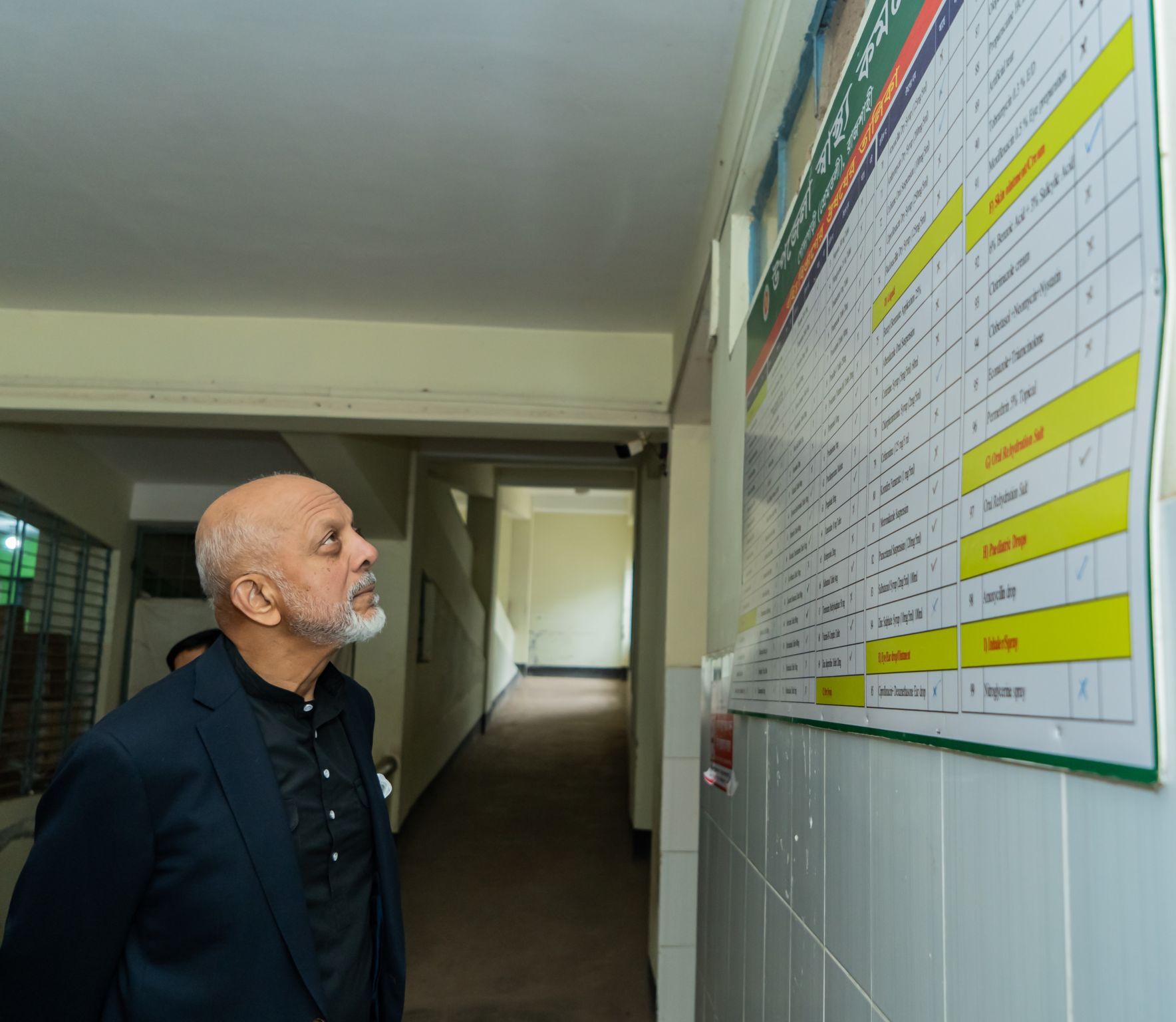
Naveen Rao, Senior Vice President of the Health Initiative at The Rockefeller Foundation, on a field visit near Rajshahi, Bangladesh. (Photo courtesy of icddr,b)
No single sector could have developed HeatShield alone. It took leaders across sectors working together — not only to respond to heat day-by-day, but to reshape food systems and health services for a hotter future. It’s a concrete example of how we need to reimagine public health for the 21st century: prioritizing a whole-of-society response to tackle challenges like extreme heat. From its effects on the human body to farmers’ livelihoods and the stability of national food supplies, heat touches every aspect of life — and demands solutions that do the same.
The fight against heat, though, is far from over. Programs like HeatShield are a promising start, but we need greater collaboration, commitment, and financing from leaders across sectors to protect communities from climate challenges. That’s why the Rockefeller Foundation is working to further strengthen heat resilience in South Asia.
As part of a larger global effort to expand climate-informed health action in vulnerable regions, we recently partnered with the WHO-WMO Joint Climate and Health Programme and Wellcome to launch two new initiatives, including:
- A dedicated South Asia Climate-Health Desk, implemented with the Indian Institute of Tropical Meteorology (IITM), India Meteorological Department (IMD), and other partners, which will enable meteorological and health agencies to work more closely together and act faster when extreme heat occurs.
- The South Asia Scientific Research Consortium (led by the Indian Institute of Science Education and Research Pune), to deepen our understanding of how extreme heat affects people across South Asia.
Together, these efforts will help turn better science into smarter policy, and earlier warnings into lives saved.
When I think back to Promila, and farmers like her across South Asia, one thing is clear: when everyone owns the response to heat, communities are no longer just subjected to a hotter world — they can survive and thrive in it.