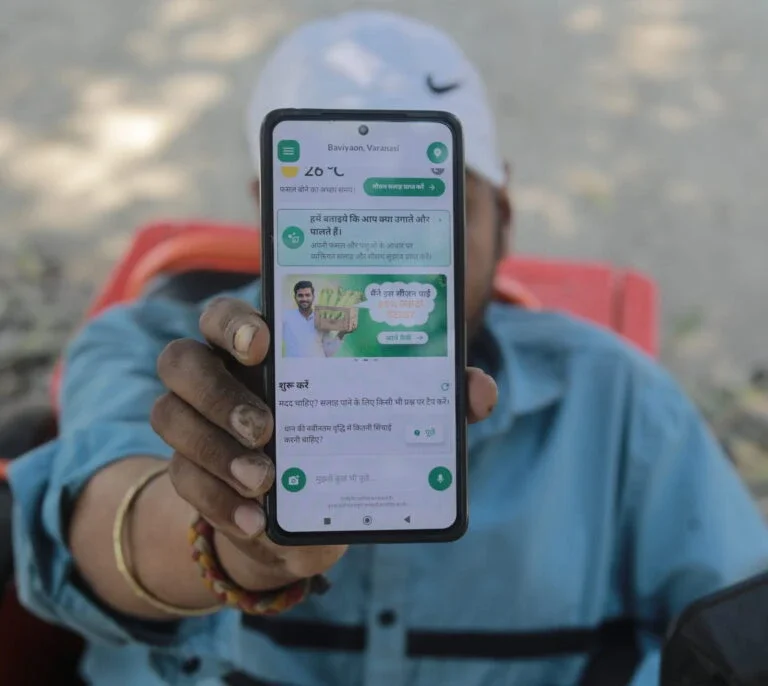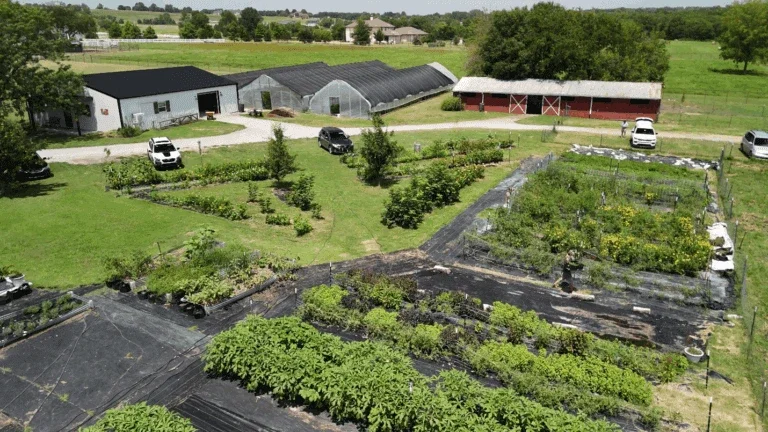
Over the past 20 years, I’ve met a lot of farmers. I’ve handled more than a hundred varieties of potatoes in Peru and Bolivia. I’ve visited backyard poultry businesses in India and Indonesia, and apricot orchards in Kyrgyzstan and Uzbekistan. I’ve pulled beets and cut kale on farms across the United States.
One insight has held true everywhere: farming is about more than the food we eat.
In every region and every country, agriculture is closely tied to livelihoods, environmental health, economic opportunity, and the dignity and community empowerment that come with having agency over what we grow and how we grow it.
So when I started at The Rockefeller Foundation in 2018 — at a moment when the Foundation was reimagining its global work on food and agriculture — the opportunity in front of us was clear: with the right investments, food systems strategies can reduce chronic disease, mitigate climate change, restore ecosystems, create dignified jobs, and revitalize rural economies.
The question for our Food Initiative became: how do you move an entire food system — not just one or two metrics — toward something healthier, more equitable, and more resilient?
We began by looking for areas with credibility on the ground where momentum already existed, ideas where organizing was underway and infrastructure was starting to take shape. As a philanthropy, we could help accelerate the work of local leaders through funding, but also by convening unlikely partners, supporting data innovation, and helping policymakers understand emerging opportunities.
One clear example was the concept of “good food procurement” — the idea that large institutional food programs, like those in schools and hospitals, can improve community health while also creating markets for farmers who meet a set of “good food” values. Institutional food purchasing, in other words, can advance a system that is more equitable, sustainable, and nourishing all at once.
From this concept emerged the Good Food Purchasing Program (GFPP), launched in 2012 by the Center for Good Food Purchasing and expanded with organizing partners like HEAL Food Alliance, Food Chain Workers Alliance, and local coalitions in several cities across the country. Recognizing the impact of the more than $120 billion spent annually by public and private institutions on food, GFPP helps cities and institutions bring transparency to how those dollars are spent and measure progress toward social, economic, and environmental goals.
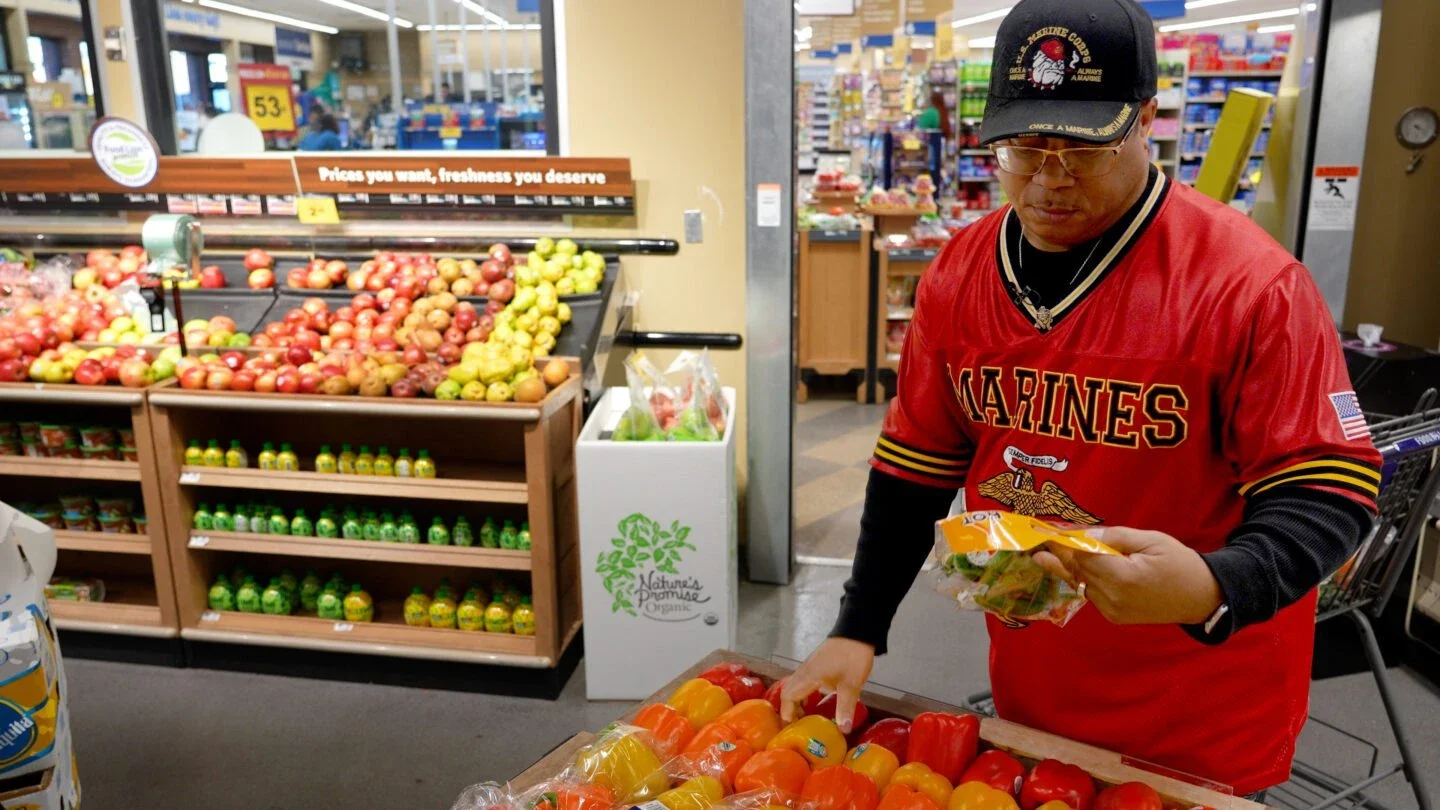
Veteran Kenny Joyner utilizing a Food in Medicine produce prescription.
Around the same time, The Rockefeller Foundation also began supporting community organizations pioneering another idea: Food is Medicine (FIM).
The concept is simple: doctors prescribe healthy food to patients with diet-related diseases, and health insurance covers the cost, just as it would medication.
Many of the community organizations advancing FIM were already incorporating principles similar to GFPP by sourcing food from diversified local farms using sound ecological practices. But as FIM began gaining national momentum and increasing scale — drawing interest from healthcare systems, policymakers, investors, and private providers — we recognized that sustaining opportunities for local farmers and community-based providers would not happen automatically. It would require intentional program and policy design.
The future of Food is Medicine is not just about quantity. It’s about quality — of relationships, of food, and of care. And that begins, always, with the local.
Michelle HowellFarmer, Need More Acres FarmScottsville, Kentucky
In 2023, when The Rockefeller Foundation expanded its commitment to FIM to total a $100 million philanthropic investment, we anchored these same principles: FIM programs can serve as powerful market drivers for good food systems by directing revenue to local economies, underserved farmers, and sustainable and regenerative farms.
The need is clear. Roughly 1.7 million small and mid-sized family farms operate in the United States, and many face persistent financial pressure. On average, the U.S. loses more than 20,000 farms every year. These farmers often struggle to access markets and capital, even though they are frequently best positioned to steward land using sustainable practices.
By directing healthcare dollars toward small and mid-sized and underserved farmers — including regenerative farmers, farmers of color, women farmers, and Veteran farmers- many of our grantees and partners, from Oregon to Oklahoma and Hawaii to Virginia, are stabilizing family farms and bringing new revenue into rural communities, all while improving health outcomes with their FIM programs.
And by contracting with these local and community-based FIM providers, states are also creating jobs and economic growth by keeping food logistics, processing, meal production, and other food businesses in their local economy — while also placing these important programs with the local organizations that know their communities best.
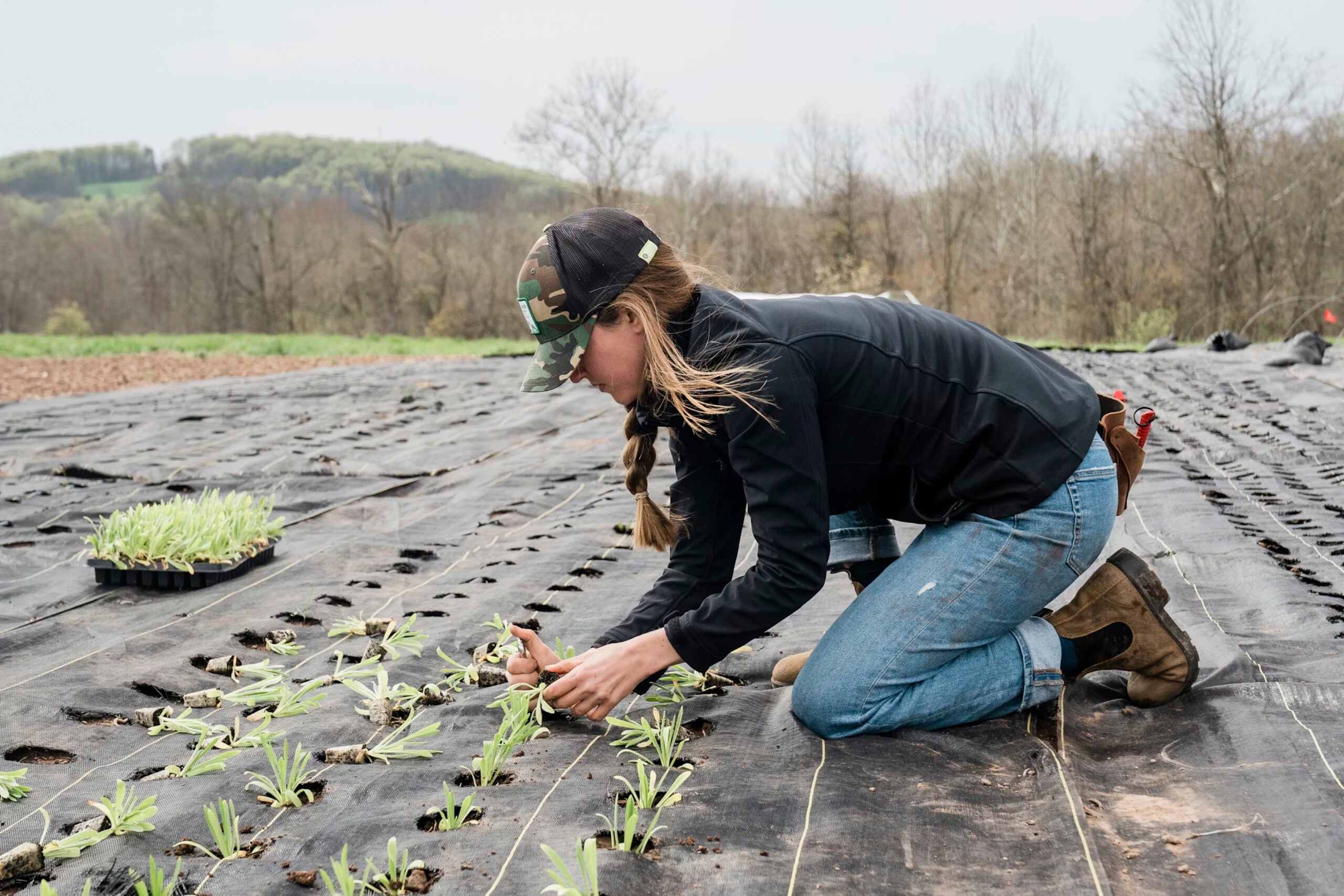
A farmer begins the careful work of cultivating crops that will nourish communities and support local agriculture.
Our new report, From Farm to FIM: The Economic Impact of Food is Medicine, quantifies the scale of this opportunity and outlines the actions needed to ensure that as this market grows, it benefits not only Americans struggling with their health, but also farmers, workers, and entire state economies.
Localizing FIM according to each state’s capacity has the potential to create 316,000 new jobs, generate $5.6 billion in annual revenue for small and mid-sized farmers, and increase GDP by $45 billion annually.
Right now, we have a rare window of opportunity to build localization and good food values into this emerging market from the start.
And while the report focuses on economics, the benefits of local, regenerative, and equitable food sourcing extend far beyond dollars: ecological resilience, stronger communities, nutrient-dense food, and the dignity of farmers being able to sustain their livelihoods.
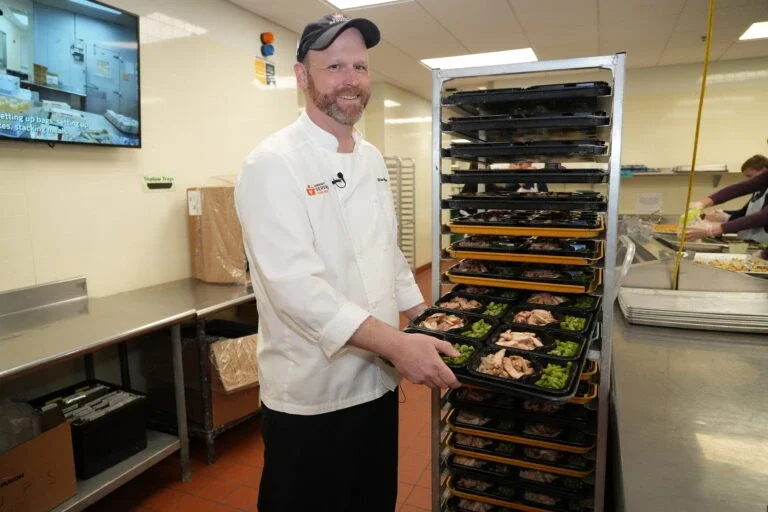
When I think about the potential of this work, I think about our grantees, like Community Servings, a Massachusetts-based organization that serves medically tailored meals and groceries to the Massachusetts and Rhode Island communities. Through partnerships with local producers, purveyors, and food rescue groups, their team increasingly provides clients with meals made with high quality local products.
Since their founding, Community Servings has provided more than 13 million medically tailored meals to those living with severe critical and chronic illnesses such as HIV, cancer, diabetes, and kidney disease.
I also think about our grantee 4P Foods – a food hub based in Virginia that sources from roughly 140 small and mid-sized farms across the Mid-Atlantic and connects that food directly to Food as Medicine programs and other institutional markets. As FIM grows into a significant market force, food hubs like 4P provide the infrastructure that makes local and regenerative sourcing possible at scale — helping farmers access institutional markets they couldn’t reach alone.
Organizations like these are helping build momentum behind FIM. Their work shows how closely food is connected to health, jobs, climate, and equity.
For many people working in this space, the motivation is deeply personal. Farming is complex, beautiful, intellectually rich work — tied to the rhythms of soil, seasons, and community.
Farm to FIM represents an opportunity to build a food system that honors that work — one where farmers thrive, communities eat well, and health, agriculture, and the economy move forward together.