All Perspectives / All Perspectives

Designing a Better World — Together

At COP30, the science spoke louder than the speeches. The latest models show we are tracking well above the 1.5 degrees Celsius of warming outlined at COP25. That may seem modest, but warming isn’t felt evenly. What may be a more pleasant summer for some will mean reshaped coastlines, disrupted food systems, and strained public health infrastructure for others, causing millions to leave their homes. In the Amazon, the picture is even more alarming. Hot season temperatures have risen well over 3 degrees, and tropical forests — once thought too wet to burn — are now catching fire. A scientist told me after a panel, that at a sustained 2.5 degrees of warming, Belém — a city of more than 1 million people — could become uninhabitable. That is no longer a distant possibility; it is a future arriving faster than anyone expected.

We are already feeling the impacts. Extreme heat kills one person every minute, and 50% of the world’s population endured over 30 days of deadly heat in the past year. Global electricity demand spiked by 4.3% in 2024, nearly double the annual average of the past decade in large part due to rising temperatures. Yet, energy choices continue to lock in polluting infrastructure of the past. And climate finance still disproportionately favors mitigation, leaving less than 10% of climate finance supporting adaptation and frontline communities exposed.
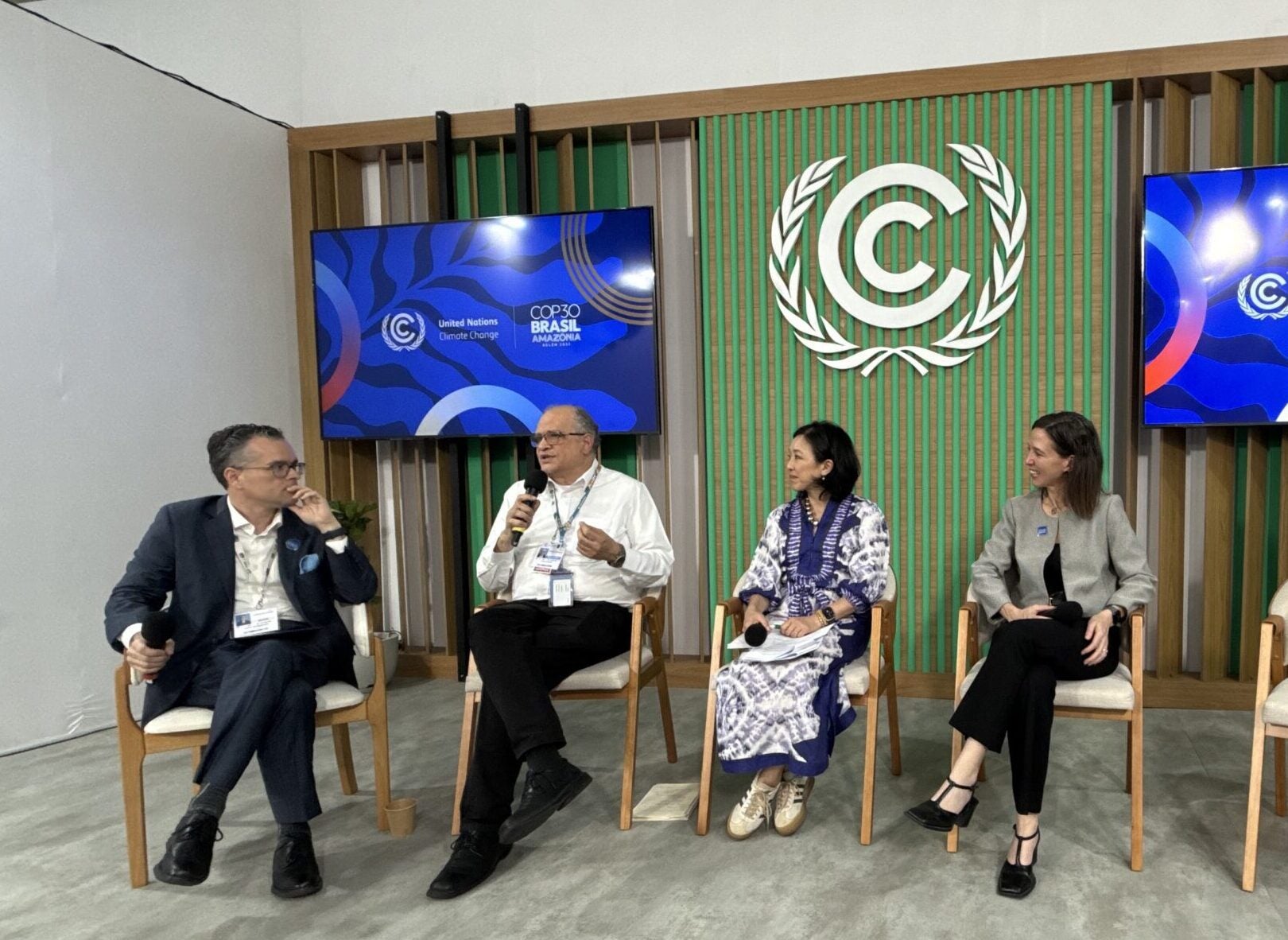
And yet, amid the urgency, I found optimism. Brazil’s leadership on the sociobioeconomy showed that development can respect both people and planet. Subnational leadership is delivering practical innovation, from cleaner mobility to heat-resilient design. And the Global Stocktake reminded us that climate crisis is not just a test of technology or policy — it’s a test of who we are. It calls on us to ground our choices in ethics, equity, and empathy.

The path forward is clear: adaptation and mitigation must move together to deliver resilience, powered by finance and guided by dignity. We are not here just to cool the planet or endure a warmer world — we are here to design a better one.

COP30 didn’t just deliver warnings; it offered direction. Three priorities stood out to me as essential to turning ambition into impact:

1. Make Development Climate-Smart — Everywhere

COP30 reminded us that climate action and development must move together. Resilience isn’t just about protecting ecosystems, it is about strengthening the economies and communities that rely on them.

Brazil’s sociobioeconomy provides a compelling example. It reverses the old paradigm by making a standing tree more valuable than the timber it yields. Biodiversity becomes economic infrastructure — sustaining livelihoods, preserving cultures, and enabling inclusive growth in a region where more than 30 million people depend on forest-based economies. Yet this potential is constrained by limited access to finance, supply chain barriers and land rights that keep many producers from reaching higher-value markets. To help unlock this value, The Rockefeller Foundation is partnering with 12 organizations to improve biodiversity and soil health, strengthen smallholder farming systems, and expanding access to nutritious, locally sourced school meals. The link between school nutrition and regenerative agriculture shows how communities can prosper when biodiversity is treated as infrastructure, not extraction.

Scaling climate-smart development means aligning climate goals with social and economic priorities: expanding clean energy that delivers new jobs, designing cities that delivers health equity, and channeling finance to sectors where adaptation and opportunity meet. It requires a policy environment that protects forests and communities and directs investment towards resilient growth. Climate-smart development is ultimately about moving beyond carbon accounting to build economies that are regenerative by design.

2. Empower Cities and Local Leaders — Where Climate Action becomes Real

By 2050, 70 percent of the world’s population will live in cities, many of them warming faster than surrounding areas. Urban areas can become climate victims — or climate innovators.

At COP30, cities demonstrated what national governments often cannot: rapid, practical action. They are upgrading infrastructure, deploying early-warning systems to protect residents from extreme heat — including the one recently rolled out in Rio de Janeiro and advancing programs like the Cool Cities Accelerator, which The Rockefeller Foundation supports. These initiatives empower local leaders to coordinate across agencies, protect the most heat exposed neighborhoods and build cooler, safer communities.

Urban challenges are broader than heat — cities are confronting flooding, water scarcity, grid stress and housing vulnerability — risks that disproportionately fall on low-income residents. Cities also lack access to finance, data and the authority to respond at scale. But cities are not merely sites of risk; they are engines of innovation. Unlocking their full potential, requires empowering local leaders with the resources and decision-making power to act. Climate adaptation is delivered block by block — in schools, hospitals, transit systems, and local economies — and strengthening local leadership is essential to making climate action real where people live.

3. Transform Climate Finance — Grow the Pie, Redesign the System

The math doesn’t add up. Climate finance today is too small and too concentrated. Global needs are estimated at $5-7 trillion annually by 2030, and yet current flows are around $1.3 trillion. Funding is also misaligned — energy and transport absorb over 60% of mitigation finance, while agriculture and forestry — which need 16–25% — receive just 4%. Adaptation consistently gets the smallest share even though billions face escalating climate risks.

At COP30, I heard a common refrain: every sector feels underfunded because the pie itself is too small, and its allocation reflects outdated priorities. Low and middle income regions, which face the most severe impacts, only receive a fraction of what they need. Structural barriers — from high perceived risk, weak pipelines of ‘bankable projects’ and limited local fiscal capacity — prevent capital from flowing to where it matters most.

Growing the pie will require multilateral development banks to take more risk, regulatory reforms to unlock private investment, and philanthropic capital to be deployed more strategically. Redesigning the system is just as important — channeling finance to frontline and indigenous communities, integrating adaptation and mitigation rather than funding them in silos, and directing resources to communities that are absorbing the brunt of climate impacts and yet receiving the least support.

Finance must evolve from gap-filling to system-shifting — shifting markets, enabling resilience, and redefining what and who benefits.

The climate crisis is already reshaping how we live, work, and thrive. COP30 made it clear that the choices we make now will determine not only the temperature of the planet, but the stability of our societies. Integrated action — linking climate and development, resilience and opportunity — is essential.

At The Rockefeller Foundation, we are committed to showing what this can look like in practice:

  • The Global Energy Alliance’s work is on target to reach 91 million people with new and improved energy access while supporting 3 million new jobs.
  • Our Regenerative School Meals initiative is reducing the impacts of climate change while strengthening education, agriculture, and local economies. A recent EAT Lancet report shows sustainable school meals can save up to $200 billion in healthcare costs, $70 billion in climate-related losses, with up to $35 in economic and social returns for every $1 invested.
  • Because the climate crisis is the single biggest threat to global health, we are advancing climate-informed health systems to protect people against extreme heat and other rising threats.
  • We are developing innovative finance approaches to protect natural ecosystems and avert a $2.7 trillion loss in global GDP by 2030.

We have the science, the technology, and examples of what works. What we need now is leadership and resolve: to scale proven solutions, finance transformation, and to design a future where progress restores rather than depletes our planet, in a way that directly improves the lives of people.

This is not just about surviving in a warmer world — it’s about building a better one.

Read More