All Perspectives / All Perspectives

Building a Global Movement: How Food is Medicine Is Transforming Healthcare Worldwide

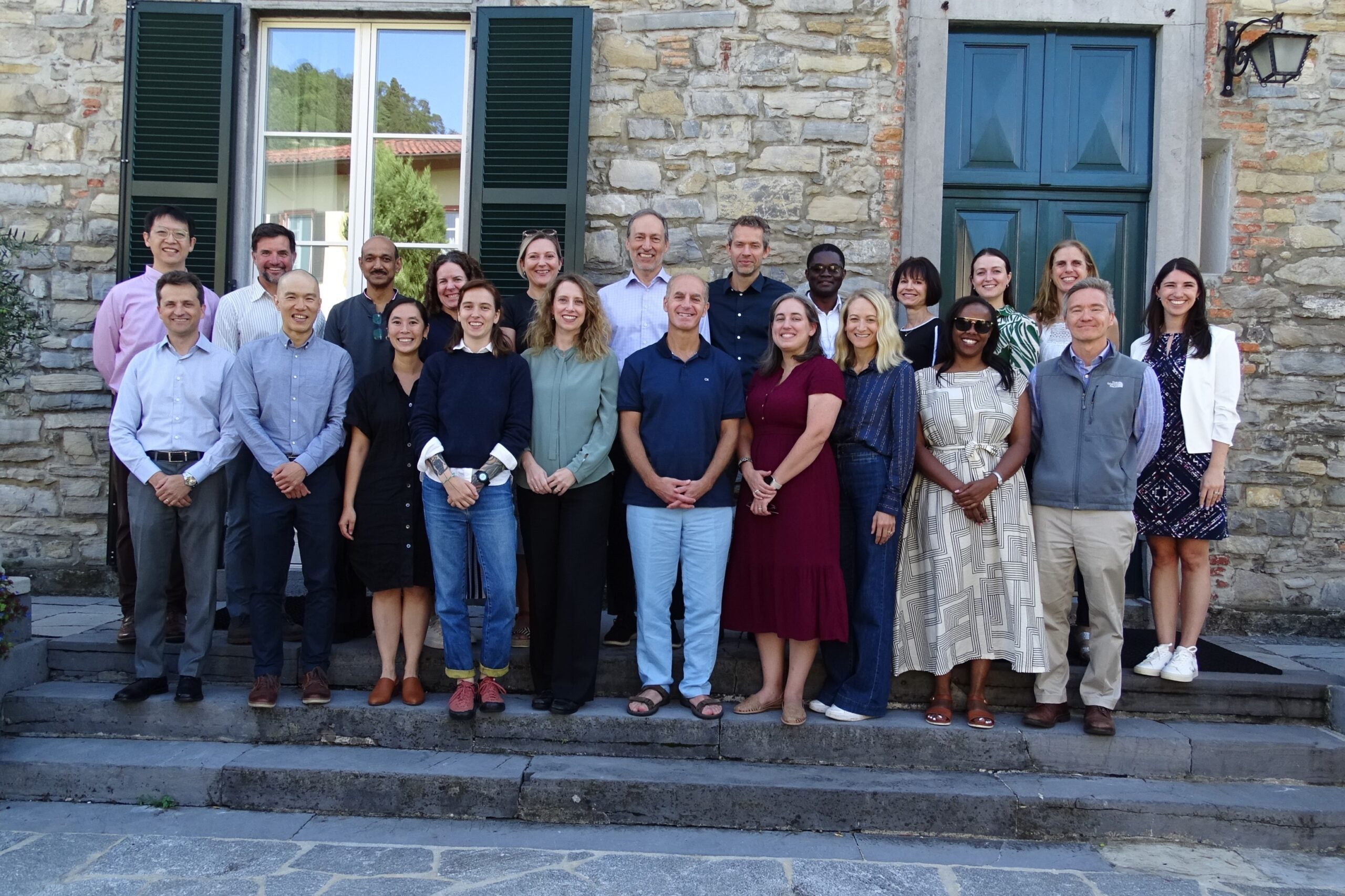
Participants at the Global Food is Medicine convening at The Rockefeller Foundation Bellagio Center.

In September 2025, researchers, healthcare practitioners, and funders from across Africa, Asia, Europe, and the Americas convened at The Rockefeller Foundation’s Bellagio Center to gather and identify opportunities to advance Food is Medicine (FIM) solutions for one of the world’s most pressing health challenges: the fact that poor diet has become the leading cause of death and disability globally.

FIM programs — such as medically tailored meals and produce prescriptions — aim to address this challenge by integrating healthy food into the healthcare system.

The Rockefeller Foundation is betting big on this initiative — committing over $100 million to advance Food is Medicine programs in the United States.

The field has gained significant momentum in the U.S. but remains fragmented globally due to varying levels of program maturity, a lack of alignment on shared terminology and principles across regions, and a lack of coordinated research agendas. September’s convening was designed to change that.
Participants at the Global Food is Medicine convening at The Rockefeller Foundation Bellagio Center.

The Bellagio Center, set in Lake Como, Italy, has hosted prominent convenings for over 60 years. Its intimate setting enables deep dialogue and trust-building, and each convening is intentionally designed to bring a diverse group of stakeholders together to solve problems, set agendas, and advance work that will improve lives.

The progress made at the first-ever Global FIM convening was tangible. Professor Jason Wu wrote about his experience, crediting the convening for successfully bringing “together leaders from across research, policy, and practice to share experiences, identify shared priorities, and explore opportunities to collaborate. Through open discussions about what’s working, what’s not, and where the biggest gaps lie, we began shaping a shared global research agenda and exploring ways to attract greater investment in bringing healthy food into healthcare.”

Over three-and-a-half days, 19 participants from the United States, Canada, Argentina, Ghana, Rwanda, South Africa, Denmark, the UK, the Netherlands, Greece, India, China, and Australia developed the first set of Global FIM Principles — eight foundational guidelines that define how Food is Medicine interventions should be integrated into healthcare systems.

Global FIM Principles

While multiple countries have championed Food is Medicine programs, the need for international coordination is critical to accelerate FIM efforts. To accomplish this, participants reached consensus on eight key principles to define the Food is Medicine field and set the foundation for global work around evidence, equity, and impact.

Food is Medicine interventions should be:

  1. Integrated: FIM integrates the provision or subsidization of nourishing food directly into healthcare delivery and financing, specifically to prevent, manage, or treat diet-related conditions (i.e., not just to promote general healthy eating or food security).
  2. Aligned: FIM catalyzes collective impact by intersecting and aligning with complementary community, population, and technology programs outside the healthcare system that support the production and consumption of nourishing food.
  3. Empowering: FIM equips and empowers people with the knowledge, skills, and resources to improve health through healthy dietary practices and through integrating nourishing foods into everyday life and care.
  4. Grounded: FIM is grounded in minimally processed, nutrient-rich whole foods, sourced locally and regeneratively when possible, that are linked to improved health outcomes.
  5. Agile: FIM is based on and evolves with new scientific evidence, even when that evidence conflicts with consensus.
  6. Inclusive: FIM prioritizes high-need populations to reduce health disparities; is tailored to individuals’ dietary and cultural preferences; is grounded in the lived experience of patients; and considers health burdens and system structures.
  7. High value: FIM provides significant value to health systems (including government) and society, for example, related to cost-effectiveness in improving health, health equity, or support of healthy food systems.
  8. Scalable: FIM requires supportive policies, financing mechanisms, technology, food systems, and delivery systems that enable sustainable and cost-effective scaling, and leverages health system organizational capabilities.

A Movement Takes Shape

The Global FIM convening was one step towards an ultimate goal: To cut diet-related non-communicable diseases (like diabetes, cancer, or cardiovascular disease) in half, bring relief to maxed-out healthcare systems, and reduce socioeconomic health disparities across the globe.

Going forward, with the principles now established, The Rockefeller Foundation will continue to foster and build a network of individuals engaged in FIM work to march toward this goal.

“This will lead to new work activating a global collaborative to accelerate FIM learning and implementation, allowing us to extend our impact beyond the USA,” one participant explained. This sentiment of shared collaboration and innovation was shared widely.

“I feel like I am on the cutting edge of the field and have a better understanding of what it has been and where it is going,” shared one researcher. Another added, “It will legitimize my work in my home country and help me align the language of my organization.”

As millions continue to suffer from diet-related diseases worldwide, this historic convening represents a turning point. By bringing the global FIM field into greater alignment and establishing a collaborative platform for ongoing work, the convening serves as a catalyst for what could become a fundamental shift in how healthcare systems address nutrition and health. We remain optimistic that clarity and connection will help us transform food into medicine on a truly global scale.

Read More