All Perspectives / All Perspectives

Another Energy Crisis Is Here. This Time, the Way Out Is Different.

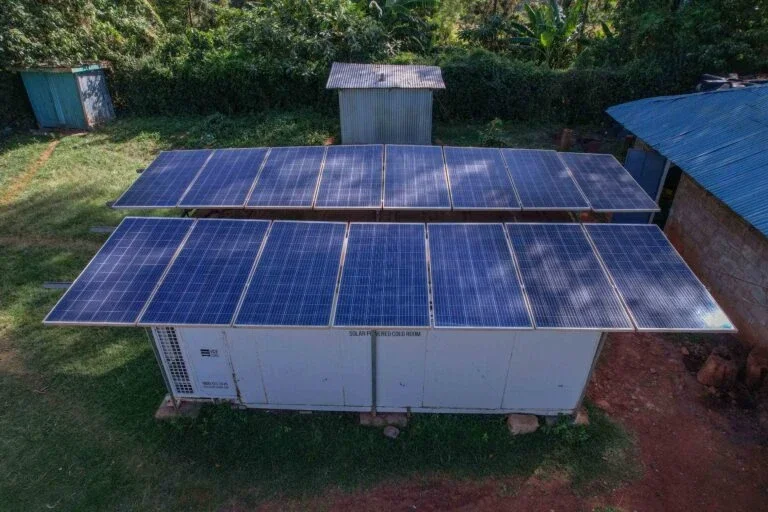
The Robinyo Interconnected Minigrid project in Ogun State, Nigeria

Disruptions in the Strait of Hormuz have triggered the largest oil supply shock in the International Energy Agency’s fifty-year history.  The strait normally carries roughly a fifth of global oil consumption and a similar share of liquified natural gas and fertilizer inputs. When flows through Hormuz are disrupted, the effects extend quickly beyond energy markets.

For households, the effects are predictable: higher fuel and food prices, and tighter incomes. For many countries, the impact is immediate: rising import bills, weaker currencies and renewed inflation pressures. In low- and middle-income economies already facing high debt burdens and limited fiscal space, spending on fuel crowds out critical investments in health, education and food security.

This is a familiar pattern. Oil shocks in the 1970s, the Gulf War and Russia’s invasion of Ukraine all raised expectations that higher prices would accelerate a lasting shift away from fossil fuels. Each time, the adjustment proved temporary – prices fell, urgency faded and the structural exposure remained.

What is different today is not the risk — it is the alternative.

Energy Dependence as a Development Vulnerability

Today’s macroeconomic backdrop is far more fragile than in the past. High debt burdens and rising debt service costs coincide with declining development assistance, making dependence on imported fuel an even bigger economic vulnerability. Each additional dollar spent on fossil fuel tightens balance‑of‑payments constraints, fuels inflation, and forces sharper fiscal tradeoffs.

This is the first energy shock where clean energy is not a moral or long‑term bet, but the cheapest and fastest way for low‑ and middle‑income countries to protect macroeconomic stability, food security, and fiscal space.

How Energy Shocks Travel: The Fertilizer Channel

The disruption in the Strait of Hormuz is not just an energy shock—it is a stress test for development models built on imported fuel. The Arabian Gulf accounts for roughly 20-30% percent of global fertilizer trade flows, about 35 percent of global urea exports, and roughly 30 percent of global ammonia exports. Nearly 45 percent of global nitrogenous fertilizer use – including urea and ammonia – is devoted to growing staple grains such as wheat, rice, and maize, which together supply more than 40 percent of global caloric intake.
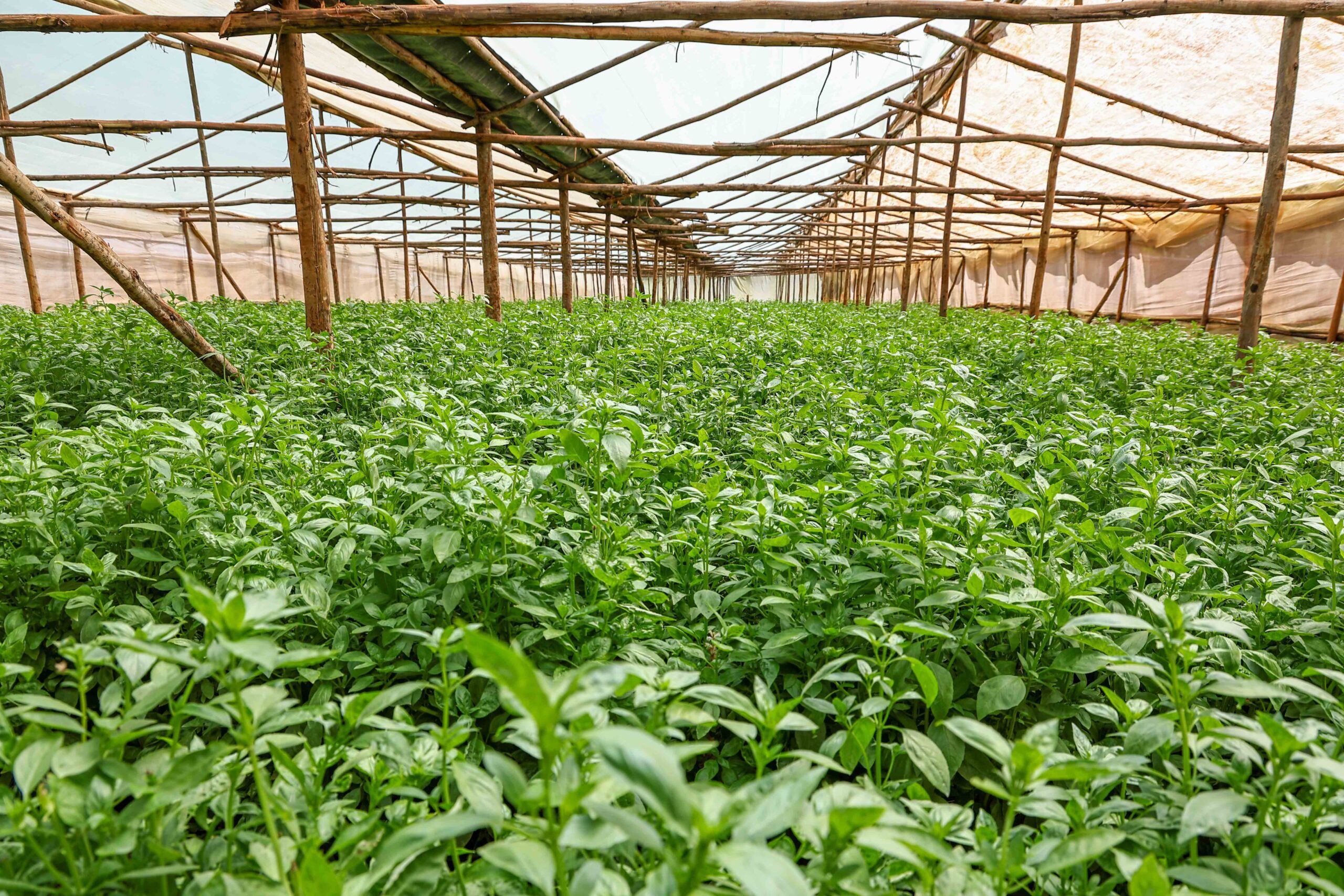
When energy prices spike and shipping routes are disrupted, fertilizer markets tighten — driving food price increases months later. This is particularly acute in import‑dependent regions such as South Asia, Sub‑Saharan Africa, and Southeast Asia, where farmers have little margin to absorb higher input costs.

The result is a synchronized shock across energy, food, inflation, and government budgets. This interlocking exposure is the real risk—and it is what energy independence helps break.

Clean energy does not eliminate fertilizer vulnerabilities, but it reduces reliance on imported fuels – lowering the likelihood that a single external shock cascades across multiple systems.

That reduction in systemic exposure is the resilience dividend. It marks a break from prior oil shocks: resilience is no longer a trade‑off against growth or affordability, but is the lowest‑cost way to reduce macroeconomic risk. And for the first time, market economics and trade rules are reinforcing that shift.

The Real Break: Resilience Is Now Economically Rational

For the first time, resilience is also the lowest-cost option.

Since 2010, the cost of utility-scale solar has fallen by around 90 percent, onshore wind by 70 percent, and battery storage by roughly 90 percent. Even at normal fuel prices, new solar power already costs roughly half as much as new coal ($0.073/kWh) or combined-cycle gas ($0.085/kWh). In many markets, solar paired with energy storage is cheaper than new fossil fuel generation.

Clean energy is now a near-term economic stabilizer. It reduces import dependence, eases currency pressure, lowers inflation risk, and protects scarce fiscal space.

Countries that leaned into this shift earlier are not insulated from today’s crisis, but they are better positioned than they were in 2022:

  • Global EV adoption avoided 1.7 million barrels of oil consumption per day in 2025 — roughly 70 percent of Iran’s exports through the Strait of Hormuz. China saves an estimated $28 billion a year in avoided oil imports through its EV fleet alone.
  • Pakistan’s rapid solar build‑out since 2023 has made solar one of the country’s largest electricity source, contributing to a roughly 40 percent reduction in oil and gas imports between 2022 and 2024.
  • In India, long‑term contracts for solar paired with battery storage are being signed at prices competitive with any fossil alternative.
  • Across parts of Africa, solar mini‑grids are delivering reliable power to reduce dependence on imported diesel and unreliable national grids.

These are real buffers operating during the largest oil disruption in history.

Trade Is Starting to Reward Resilience

A second shift is reinforcing this trend. Mechanisms like the EU’s Carbon Border Adjustment Mechanism – fully in force as of January 2026 – impose real costs on carbon intensive production and reward cleaner, more predictable systems.

For emerging economies, this creates both risk and opportunity. Countries that cannot demonstrate low-carbon production may lose competitiveness. Countries with high shares of renewable power, like Kenya, where 90 percent of electricity generation comes from renewables, can increasingly turn clean electricity into an export advantage through preferential access to global supply chains.

While not independently transformative, these incentives matter: when clean energy is already the lowest-cost option, even modest trade advantages can shift investment at scale and help support broader movement toward resilient and sustainable development.

When Finance and Trade Align, Resilience Becomes Investable

If clean energy is cheaper, faster, and more resilient, why has the transition not moved faster where it is needed most?

The answer is finance.

Clean energy systems require higher upfront investment, even though lifetime costs are lower. In countries facing high borrowing costs, currency risk, and policy uncertainty, that upfront hurdle remains prohibitive. Financing costs for utility‑scale solar in emerging economies are more than double those in advanced economies.

This creates the central paradox of the current crisis: the countries most exposed to fossil fuel shocks are often those where the least‑cost alternative is hardest to finance. The technology is cheap. The capital is expensive.

The solution is to lower the cost of capital and secure demand at the same time. Philanthropy has a critical role to play – using flexible capital to support guarantees and first loss structures that reduce risk and crowd in private investment in pursuit of public good objectives. In parallel, trade frameworks – such as carbon border adjustments and long-term offtake agreements can help create predictable markets for clean production.

When these forces align, they resolve a long-standing coordination failure: capital without markets, and markets without capital. Resilience becomes investable and increasingly competitive. Energy shocks stop cascading into fiscal crises and food emergencies, and instead become catalysts for stronger, more resilient economies.

Countries that move first gain a durable advantage — they become more competitive, more investable, and more stable. Those that do not remain vulnerable to recurring shocks and rising borrowing costs.

Previous oil shocks failed to produce lasting change because they lacked at least one of three conditions: affordable alternatives, credible market incentives, or access to finance at scale. For the first time, all three are now in place.

In today’s global economy, energy independence is no longer an aspiration. It is the lowest-cost path to economic stability.

What remains is execution — and that is the work ahead.

This article was drafted with the input of members of the Climate Development Advisory Council. The author is grateful to the Council’s members for their contributions.

Read More