All Grantee Impact Stories / All Grantee Impact Stories Grantee Impact Story

How Solar Energy and Herb Farming Are Powering Women’s Livelihoods

Ciku Kimeria — Featured Writer

Workers at Urban Valley Herb Farm sort out herbs.

Before solar-powered cold storage arrived at farms supported by SokoFresh — a company addressing the critical challenges of poor post-harvest handling of perishable produce and unstructured market access for farmers in Kenya — the workday only began when the sun went down. To preserve freshness, harvesting had to happen at night, using improvised charcoal cooling methods. The hours were long, work began in the evenings, and for many women, participation was difficult.

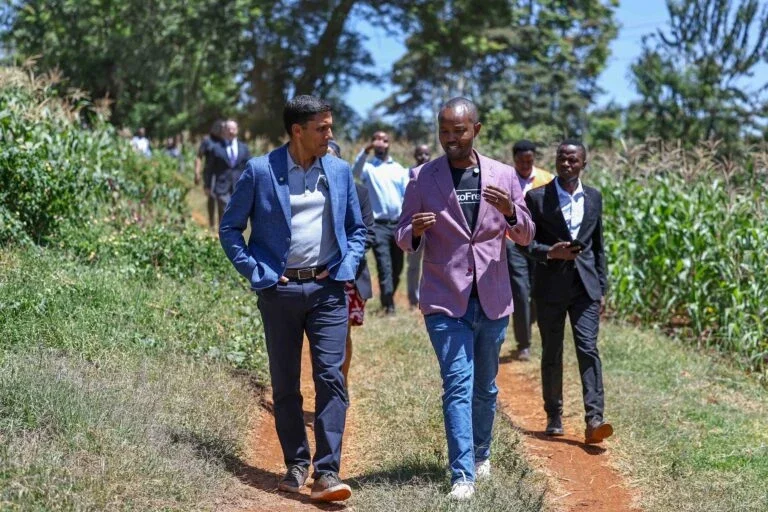
Dr. Rajiv J. Shah (left) meets with local leaders during a site visit, discussing how innovative energy and storage solutions can help farmers increase productivity and protect their livelihoods.

“We were harvesting very late,” recalls Maureen Wavomba, a 24-year-old worker at the Urban Valley Herb Farm in Kikuyu town, 20 kilometers from Nairobi. “Sometimes we would leave home in the evening and come back after midnight.”

Management at SokoFresh says that following the installation of cold storage units — allowing for round-the-clock harvesting — one unexpected outcome has been more peace at home. Andrew Thinguri, CFO of SokoFresh, explains: “We heard that for many of the women, the previous work hours caused problems and arguments at home. Their husbands didn’t really believe they were working.”
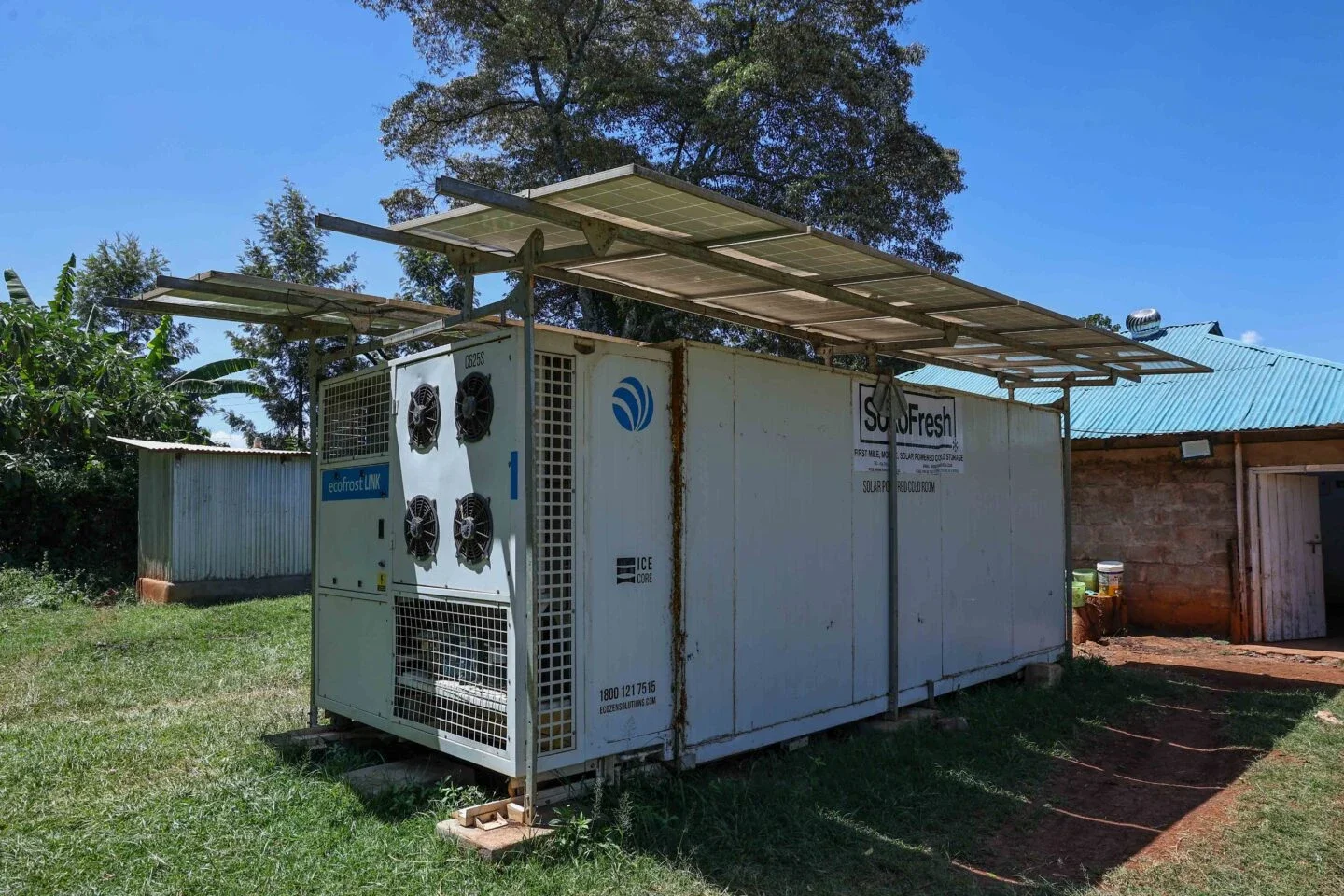
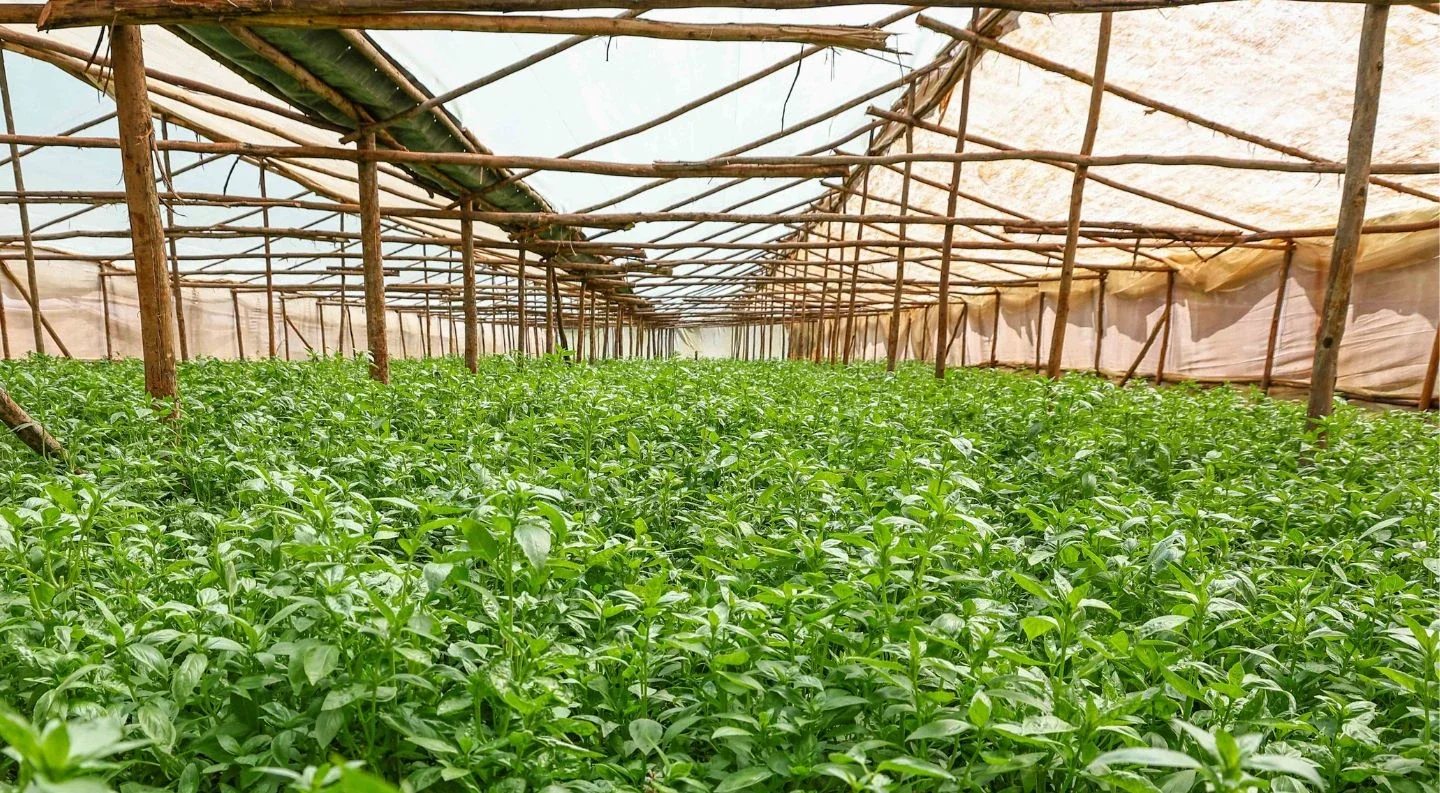
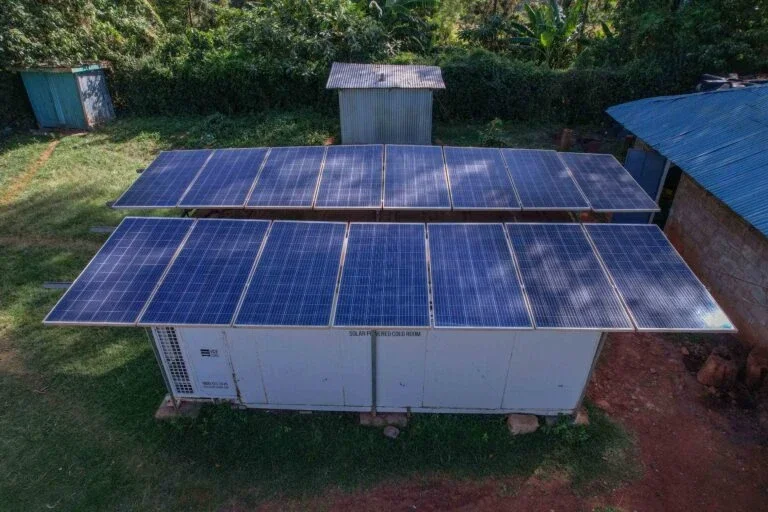
The introduction of solar cold rooms — financed through the Productive Use Financing Facility (PUFF), a flagship initiative of the Global Energy Alliance, supported by The Rockefeller Foundation, and CLASP, an international NGO — changed that reality. With temperature-controlled storage available on-site, harvesting can now happen throughout the day with produce still remaining fresh. And women who once avoided night shifts are now able to take on stable, paid roles even during the day.

“Because of the cold storage, harvesting can happen during the day,” explains Carol Koech, Vice President for Africa at the Global Energy Alliance. “And that means women can now access jobs they would not have been able to take before.”

Thinguri notes that this seemingly simple change has had a dramatic effect: the number of employees at Urban Valley Herb Farm has grown from seven to 30, while average daily earnings have risen from KES 200 (USD 1.60) to KES 500 (USD 3.90).

Shrinking Land, Growing Pressure

This shift is taking place against a broader structural reality across the continent.

“People are subdividing land as they inherit,” says Dennis Karema, co-founder and CEO of SokoFresh. “So we’re ending up with smaller and smaller pieces of land.” On shrinking plots, traditional staple crops such as maize struggle to deliver meaningful returns — locking farmers into low-income, high-risk production.

According to the Food and Agriculture Organization, the average African smallholder now farms less than 0.5 hectares. Women disproportionately manage smaller land sizes than men. In nomadic communities, where men migrate seasonally in search of grazing land or off-farm work, women are increasingly the ones left tending the plots.

Why Herb Farming Changes the Equation

In Kenya, herb varieties such as basil, mint, rosemary, and thyme are increasingly being grown on small plots because they command premium prices — often KES 300–600 ($2.30-$4.6) per kilogram in export markets — and can be harvested multiple times per season. With growth cycles as short as three to four weeks, herbs are particularly attractive for farmers with less than half an acre of land. Groups of small-scale growers are organizing to export herbs internationally, generating significant export earnings in recent years and demonstrating that high-value crops can outperform staples on limited land.

  • Fresh basil leaves harvested from a farm powered by reliable electricity.

In interviews, SokoFresh leadership contrasted typical maize profits of around $500 per season with herb plots that can earn up to $5,000 on a comparable small parcel — nearly a tenfold increase. As Karema puts it, “Herbs change the economics completely because you harvest every week and you’re selling into export markets.

Crucially, this shift does not require land expansion. “We’re not asking farmers to expand land,” he explains. “We’re asking them to grow smarter on the land they already have.”

Herb farming aligns closely with women’s labor realities. It relies on precision, consistency, and quality control rather than heavy machinery. When paired with solar-powered cold storage, it becomes even more transformative — reducing post-harvest loss, enabling daylight harvesting, and allowing women to participate safely and predictably in high-value markets.

Energy as a Jobs Strategy

The surprise has not just been productivity, but scale. Each cold storage unit has become a local economic hub — supporting 30 to 50 direct rural jobs, even before counting secondary employment in harvesting and logistics. In some cases, farmers have gone a step further, asking to buy and own the cold storage assets themselves, having done the math and seen the long-term value.

These changes matter because, according to the World Bank, while women make up roughly 40 percent of Africa’s agricultural labor force, they face systemic barriers to success and are often the most affected by energy poverty. When electricity enables productive use, it reshapes not just output, but participation.

Mission 300: Creating Jobs

PUFF is also providing a blueprint for Mission 300, an ambitious initiative to connect 300 million people in Africa to electricity by 2030, led by The World Bank and the African Development, and supported by The Rockefeller Foundation, Global Energy Alliance, and SEforALL.

Mission 300’s leaders have been clear about what’s at stake. “Energy access is the fundamental driver of job creation,” says Rajiv Shah, President of The Rockefeller Foundation, during the visit. But jobs only matter if people can take them safely and consistently.

At SokoFresh sites, energy access does more than preserve crops. It turns shrinking land into opportunity, herb farming into a viable livelihood, and women into central actors in high-value agricultural value chains. This is electrification as structural change — where productive power transforms access into income.

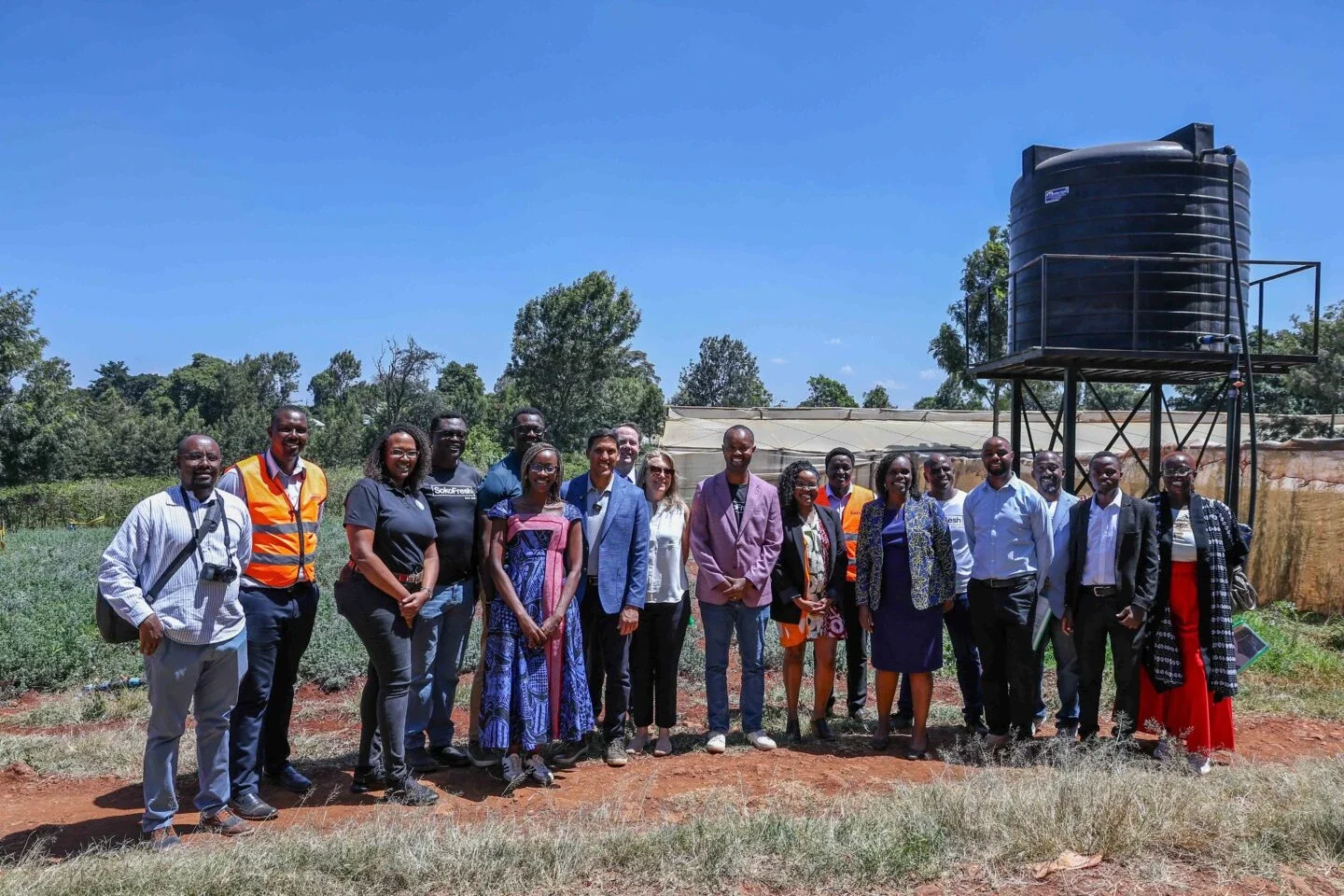
  • Dr. Rajiv J. Shah (center) and partners gather at a farm equipped with improved water and energy infrastructure designed to support farmers and reduce post-harvest losses.

Read More