For farmers, timely advice can mean the difference between loss and livelihood.
By the Numbers
- >0MillionMillion
installs globally
- >0MillionMillion
queries addressed
- 0in 10in 10
farmers report applying FarmerChat advice in the last 30 days
From Videos to AI: Building FarmerChat
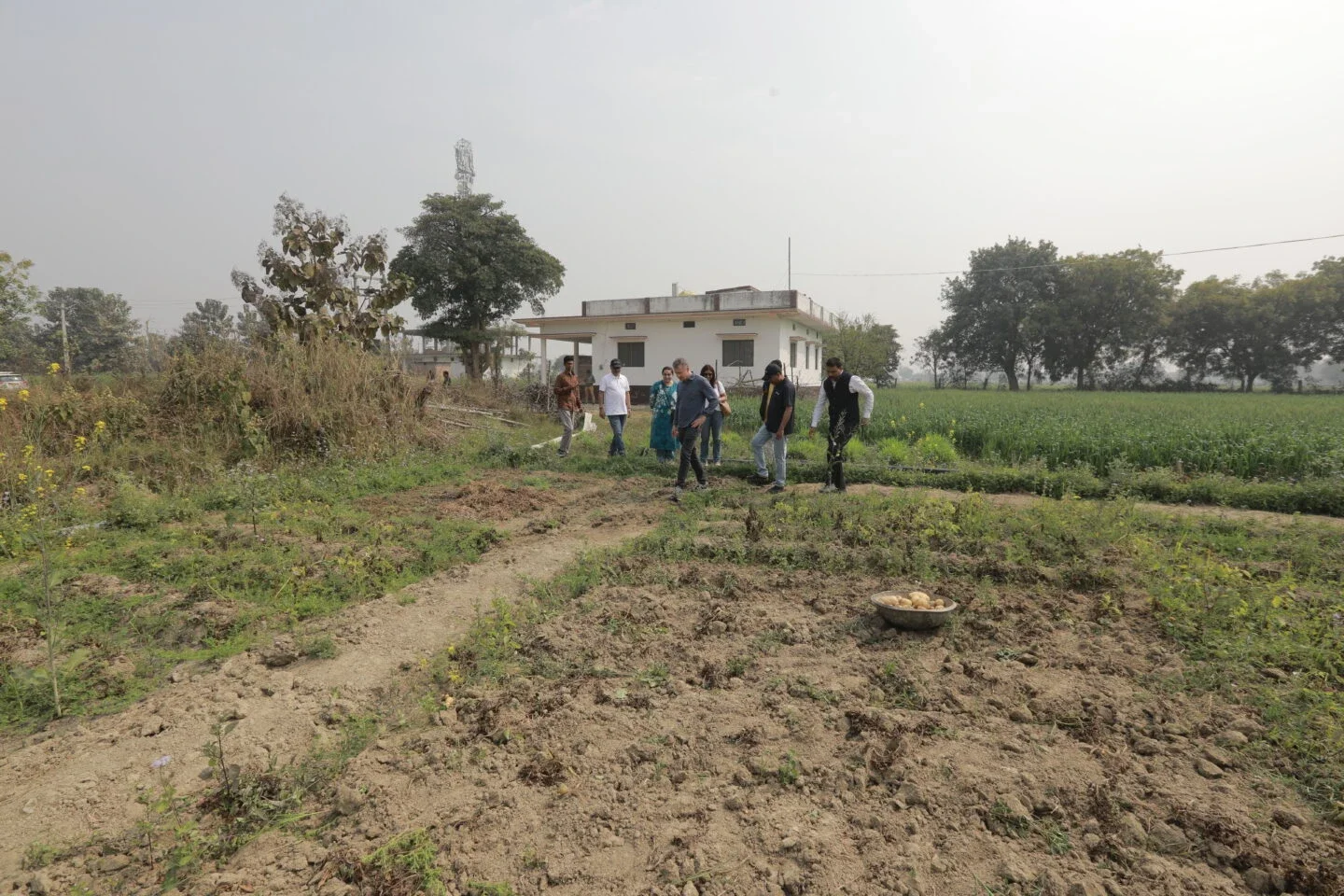
Work on FarmerChat began in 2023, with an initial rollout through more than 5,000 government agricultural extension agents across the five states of Bihar, Madhya Pradesh, Rajasthan, Uttar Pradesh, and Jharkhand. Part of the government system, these frontline advisors regularly visit villages to guide farmers on things like crop practices and pest management.
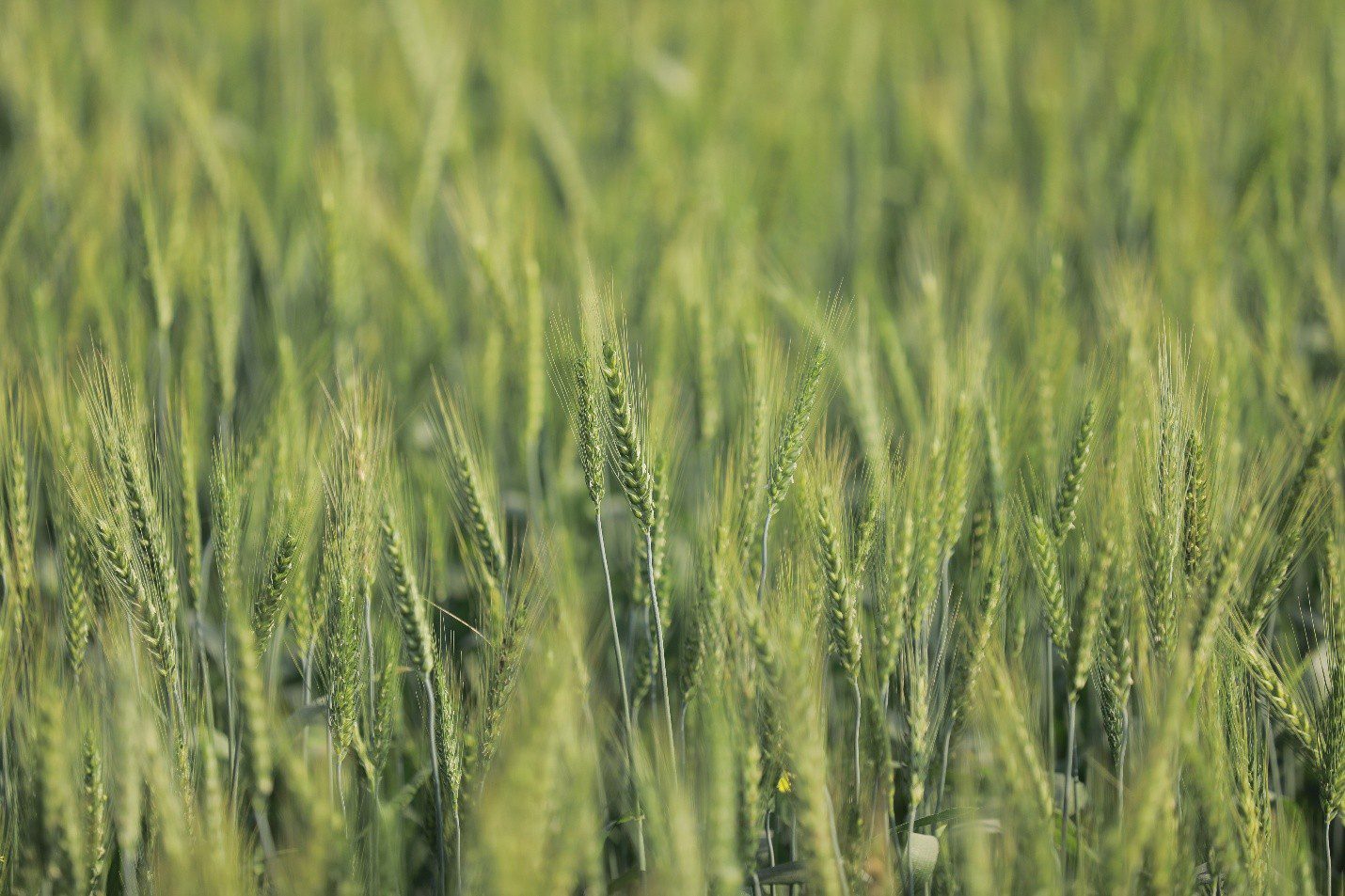
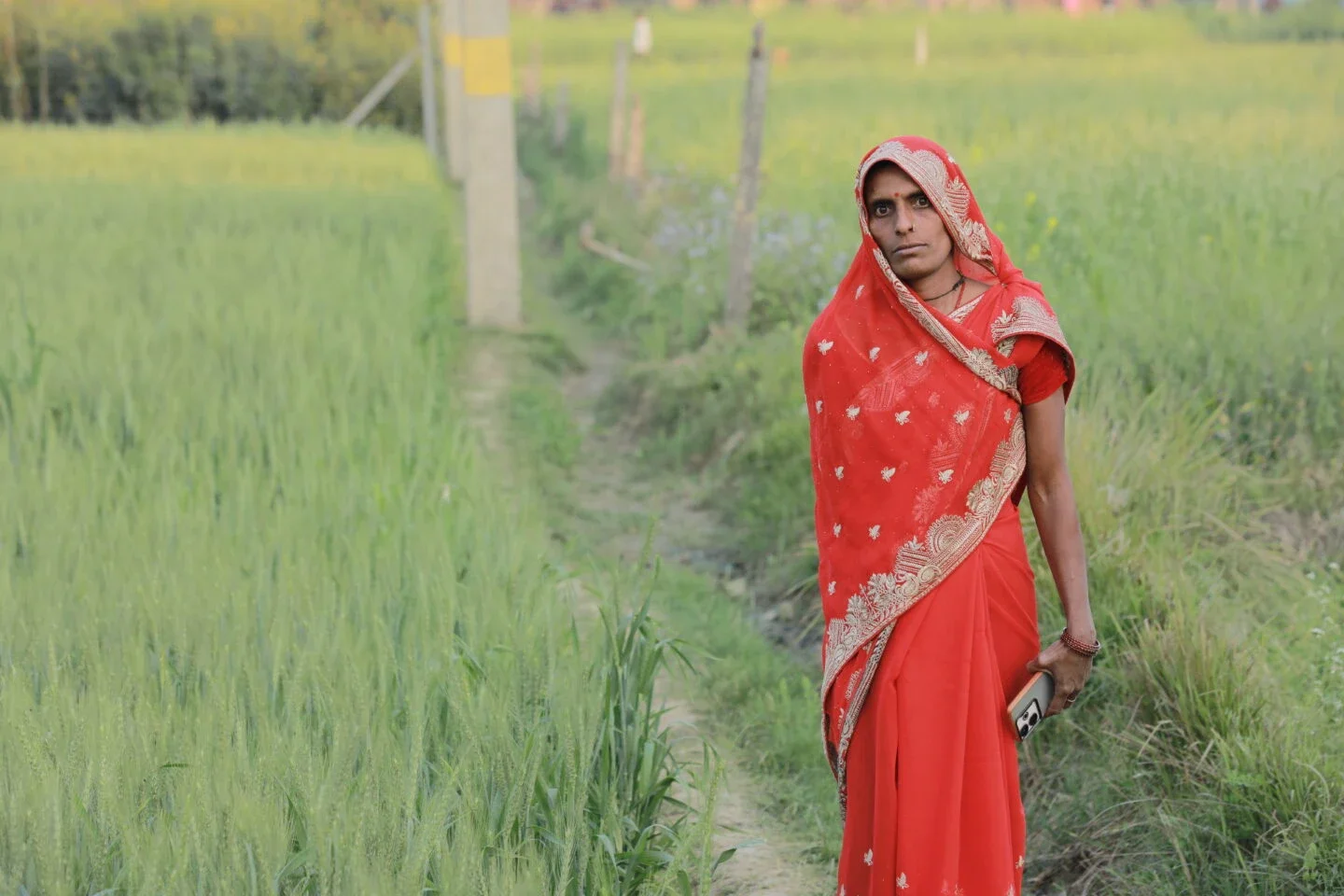
Wheat crops in Varanasi, Uttar Pradesh, where farmers rely on timely, localized advice to protect yields.
Because they are often from the same communities as the farmers they advise, they serve as trusted conduits of agricultural information, making them a natural channel to introduce farmers to new technology like FarmerChat.
The effort built on Digital Green’s long experience working at the last mile of agricultural extension, where the organization had already created a large repository of videos by and for farmers on improved practices. The organization had experimented with chatbots earlier, but it was advances in generative AI that opened more possibilities, allowing the system to ingest large amounts of information, convert it into farmer-friendly text and voice responses in local languages, and deliver it directly to farmers via their phones.
However, translating so much information into precise advice was the challenge. That’s because, in agriculture, generic advice is often useless: telling a farmer to apply fertilizer differs vastly from advising one to apply 120 kg of Urea per hectare in two split doses. Building an agricultural advisor capable of delivering a greater level of accuracy and specificity has driven Digital Green’s work over the last two years, driving continuous iteration across models, data systems, and user design.
An early version of the app relied entirely on a curated set of expert content, building from Digital Green’s farmer to farmer videos with governments. However, experience showed this approach failed to answer many farmer questions.
Today, the AI pipeline relies on a combination of approaches, including research databases, expert-vetted content, select decision-support models, and locally-led model fine-tuning to increase accuracy.
The new architecture has also allowed Digital Green to optimize for scientific research and community-level knowledge to deliver the best answer for a farmer based on their farms’ context.
By incorporating location, crop type, and real-time data such as weather patterns, it can tailor recommendations to hyperlocal conditions, a critical requirement in Indian agriculture, where advice varies by region and season. Behind the scenes, expert reviews help refine the system, improving accuracy and relevance over time.
Reaching A Million Farmers
Product improvements have gone hand in hand with rapid growth in the platform’s global reach. “When we started, we had only a few thousand users. This year, we crossed 1 million installs and growth is improving rapidly,” says Nidhi Bhasin, CEO of Digital Green India. “The app is now operational across 9 Indian states and five countries, supporting 15 languages, with farmers submitting more than 10 million queries.”
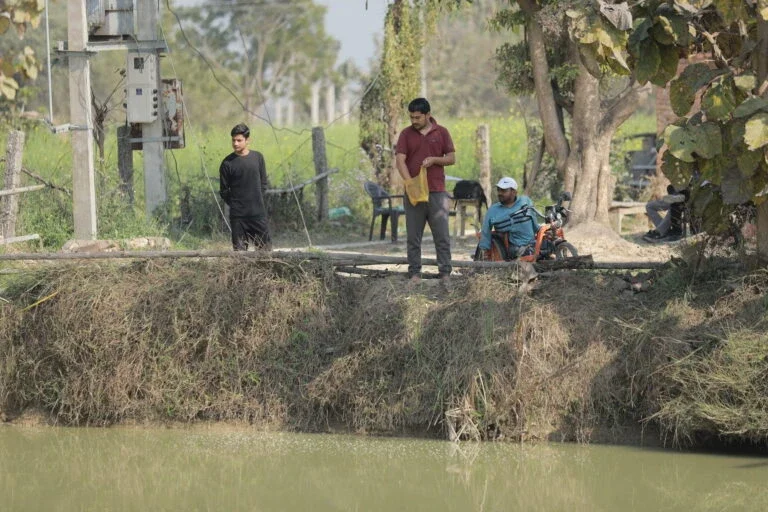
“It’s one of the largest datasets in the world on smallholder concerns,” says Sweet, “And it’s revealing not only what farmers ask, but how their concerns shift across seasons, regions, and climate patterns. For us, these questions and the usability are the real measure of impact.”
The app has also seen strong engagement among users, especially women. “In India, roughly 45 percent of our users are women. Once they are on the platform, we also see that they tend to engage more frequently than men,” says Bhasin.
Scaling Responsibly
Looking ahead, the app aims to go beyond advisory. Planned features include personalized crop calendars and AI tools that can help farmers apply directly to government schemes, as well as reintroducing short videos, going back to Digital Green’s earlier work.
For the organization, the numbers are only meaningful if trust keeps pace. “It’s not just about advice,” Bhasin says. “It’s about building trust and nurturing agency. And it won’t work unless we bring scale. But we also know that if we break trust even once, it will be hard to rebuild.”
This balance — between rapid expansion and reliability — is likely to shape the tool’s next phase of growth. Achieving it will require more than technology; it will depend on partnerships with ecosystem actors, NGOs, and governments.
Already, the organization has worked with various partners and within India’s public agricultural systems, collaborating closely with frontline extension workers who remain farmers’ most trusted source of advice. It has also been involved in Bharat VISTAAR, the Indian government’s effort to strengthen digital public infrastructure. Going forward, the plan remains to deepen this engagement, both with ecosystem players and other partners.
The Rockefeller Foundation is also working with Digital Green in Brazil and Kenya to integrate evidence-backed recommendations for regenerative farming practices into FarmerChat.
This is part of the Foundation's larger effort to support sustainable and environmentally friendly farming approaches that improve soil health and reduce reliance on synthetic pesticides.
Where Advice Meets Action
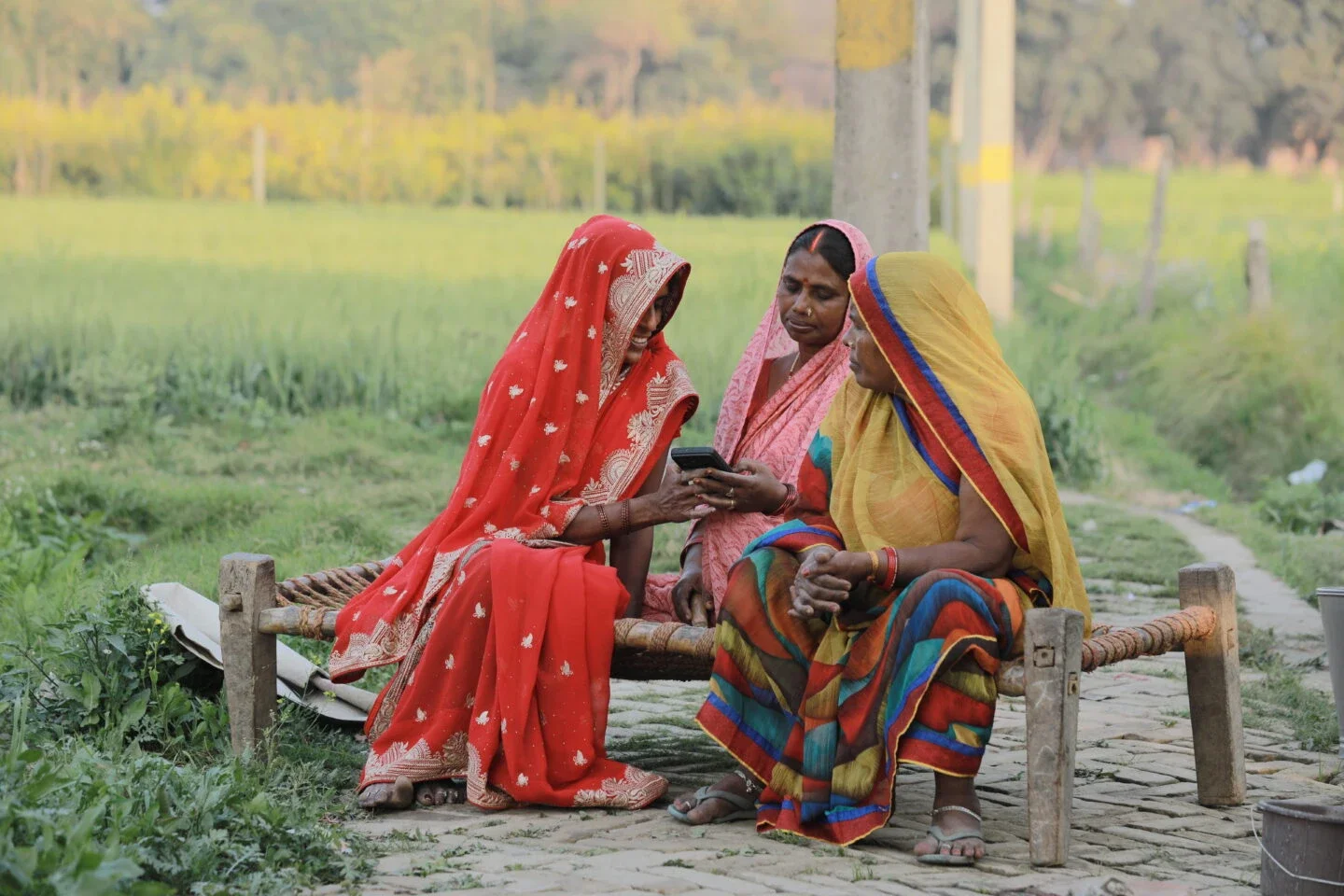
When pests threatened her lemon crop last week, Saraswati did not wait. She asked the app, received guidance and acted upon it. “I have never had access to this kind of knowledge before,” she says. For a farmer balancing four children, a husband with a disability, and the demands of field and home, the convenience of receiving advice from her home is a game changer.
For Singh, who is looking to rebuild his livelihood after losing much, having an expert in his ear has been what has mattered most. “For someone in my position, you need support,” he says. “Without it, survival is difficult.”
As FarmerChat scales across crops and districts and deepens its integration with public extension systems, this kind of engagement will matter. Digital Green’s long-standing partnerships give it a structural advantage: the tool operates not outside the system, but inside it, alongside the extension workers farmers already trust.
If the alignment holds, it could become less a standalone app and more a steady layer within India’s agricultural advisory architecture. Its real strength, however, will not be in how widely it scales, but whether farmers reach out for it in those critical moments: when a crop shows stress, when weather turns, when waiting is not an option.